DIAMONDS
17 October 2026
Moissanite vs Lab Grown Diamond: How They Differ
Moissanite is not a lab grown diamond. How hardness, fire, double image and tester results differ, and how to confirm in writing which stone you buy.
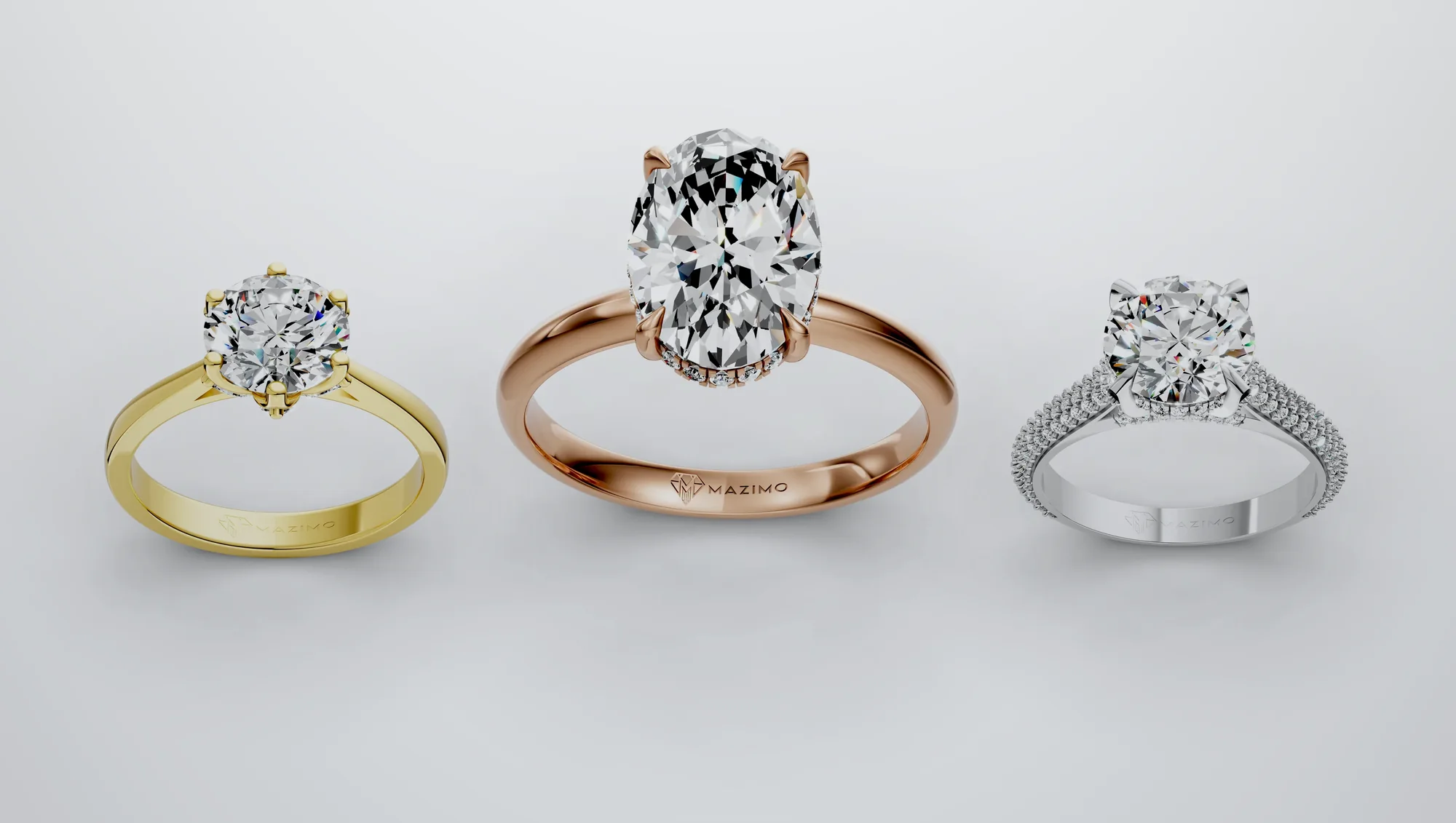
Moissanite is not a laboratory grown diamond (lab grown in the rest of this guide), so moissanite vs lab grown diamond compares two different minerals. A lab grown diamond is diamond: the same crystal structure as a natural one, rated 10 on the Mohs scale. Moissanite is a different mineral, rated 9.25, with more than twice the fire and a double image of its back facets. A thermal tester can read moissanite as diamond, so ask for the stone to be named in writing.
At a glance
- A lab grown diamond is diamond, while moissanite and cubic zirconia are simulants that only imitate it.
- Moissanite is rated 9.25 on the Mohs scale against 10 for diamond, shows more than twice the fire and is doubly refractive.
- A thermal tester reads lab grown and natural diamond alike and often reads moissanite as diamond, so a tester result is not proof: ask for a laboratory report.
- US guidance bars the unqualified word diamond for moissanite, so ask for the stone to be named in writing.
- In our diamond rings and our ring designer the centre stone is diamond, lab grown or natural. The designer offers no moissanite.
Sources checked 17 October 2026, with US rules as of 1 October 2026 and IGI as published on 24 May 2022. We have not checked UAE federal rules.
Is moissanite a lab grown diamond? Three stones compared
A lab grown diamond is diamond, and moissanite is not. GIA says moissanite and cubic zirconia are unrelated to diamond at the atomic level. IGI draws the same line: both are diamond simulants, made to imitate a stone without its properties.
So there are three things, not two. A natural diamond is made by nature, as the CIBJO Diamond Blue Book puts it. A lab grown diamond is made in a laboratory and is still diamond. Moissanite for jewellery is also made in a laboratory, GIA notes.
US guidance agrees on the first two: in 2018 the Federal Trade Commission (FTC) dropped the word natural from its definition of diamond. Our pros and cons guide covers the debate over words such as real.
Where Mazimo fits: in our diamond rings and ring designer, the centre stone is diamond, lab grown or natural. The designer starts with lab grown and offers no moissanite.
Moissanite vs lab grown diamond: hardness, fire, double image
GIA calls moissanite very hard but not as hard as diamond. The table follows GIA's guide to imitations and a GIA laboratory note from 2020. Diamond's figures follow the FTC definition of diamond. Lab grown and natural diamond share a column.
| Property | Diamond | Moissanite | Cubic zirconia |
|---|---|---|---|
| Mohs hardness | 10 | 9.25 | 8.5 |
| Specific gravity | About 3.52 | 3.22 | No figure in our sources |
| Fire | Baseline | More than twice diamond's | Slightly more than diamond's |
| Brilliance | Baseline | Slightly more | Less |
| Refraction | Refractive index 2.42 | Doubly refractive: a double image of the back facets | No figure in our sources |
Read the hardness row with care: GIA says the steps of the Mohs scale are not equal in size, so 9.25 against 10 is not a percentage. Hardness is also not toughness: GIA says diamond is the hardest gem but not necessarily the toughest. We found no source comparing moissanite's toughness with diamond's, so we make no claim.
By eye, GIA says moissanite's intense fire may give it away in large sizes, one carat or above. It also says viewers will see a double image of its back facets. We would not rely on spotting it at home: that is our advice, not GIA's. Colourless cubic zirconia can yellow with time.
What a diamond tester can and cannot tell you
The common thermal and electrical handheld testers cannot tell a lab grown diamond from a natural one, and each can mislead you in its own way. IGI wrote in 2022 that thermal testers, which measure how fast heat leaves a warm probe, make no distinction between the two.
| Method | What IGI says |
|---|---|
| Thermal tester | Reads lab grown and natural diamond alike, and frequently gives false positives for moissanite. |
| Electrical tester | Historically more reliable at separating moissanite from diamond, but can mistake certain lab grown diamonds for moissanite. |
| Testers with UV technology | Made for jewellery professionals and may help as a first screen; IGI still wants a grading report. |
| Gemmological laboratory | Lab grown against natural is better left to a laboratory; informal detection is no substitute. |
The electrical trap has a cause: IGI says a metal catalyst used in one growth method can leave remnants that make a stone conductive. The FTC's guide for jewellers also warns that a thermal tester may falsely register moissanite as diamond.
How can you tell if a diamond is real at home? GIA says you cannot spot a synthetic diamond through a loupe and that only laboratory testing will tell. It lists the fog, sandpaper, newspaper and sparkle tests as unreliable; moissanite sparkles too.
How a laboratory tells them apart
A laboratory separates moissanite from diamond in standard testing. In GIA's 2020 case, standard testing showed the stone was not a diamond, the microscope showed obvious double refraction, and spectra confirmed synthetic moissanite.
Lab grown against natural is harder. GIA says traditional gemmological observation and instruments cannot tell them apart. Its 2024 update describes screening devices that return a Pass or Refer result, deep ultraviolet imaging and photoluminescence. It warns against relying on one feature, and says a Refer result may be natural or lab grown. GIA's page on HPHT and CVD growth describes strain patterns and metal flux inclusions among the features of each method.
Inscriptions can be faked. GIA reported a round brilliant of just over one carat with a fraudulent GIA inscription that proved to be synthetic moissanite. The report number belonged to a natural diamond of the same weight, but the measurements were quite different. So check the report number on the laboratory's own site, and compare weight and measurements with the stone. Our guide to IGI and GIA diamond certificates in Dubai shows the steps.
Can moissanite be called a diamond? What each stone may be called
Under US guidance, moissanite may not be called diamond on its own, and a lab grown stone needs a clear qualifier. The FTC Jewelry Guides call the unqualified word unfair or deceptive for anything outside the definition. They are not UAE law.
A lab grown diamond needs a qualifier saying it was grown or created in a laboratory. The FTC says it goes immediately before the word diamond and equally conspicuously. Under section 23.25, the qualifier is open only to a product with essentially the same properties as the stone named. A lab grown diamond meets that test. Moissanite does not: it would need imitation or simulated before diamond, and its own name is clearer. The Guides also treat real, genuine and natural as deceptive for an artificial stone.
CIBJO, a trade body whose standards are not law, words it differently. Its guidelines prefer laboratory grown diamond in full, and name the short form lab grown diamond, hyphenated, as an abbreviation they do not allow. We use lab grown in running text as house style. If the wording matters to you, ask any seller for the full form on the invoice or report. The Blue Book says an imitation needs its own mineral name, or imitation or simulant.
In the UAE, DMCC, a Dubai free zone authority, published the Arabic Diamond Terminology Guideline on 14 December 2022. The Emirates Authority for Standardization and Metrology (ESMA) endorsed it, and DMCC says it builds on ISO 18323 and the CIBJO Blue Book.
Moissanite vs diamond size: does the same carat look the same?
At the same weight, moissanite measures about 3% more across. This is our own arithmetic from the specific gravities in the table, not a GIA claim. It takes up more volume: 3.52 ÷ 3.22 is about 1.09, or about 9% more.
In each direction that is about 3% more, because the cube root of 1.09 is about 1.03, assuming the same cut proportions. Our designer draws a 1 ct round diamond at about 6.5 mm, and 6.5 × 1.03 is about 6.7 mm. On a UAE size 52 finger of about 16.5 mm, the first covers about 39% of the width (6.5 ÷ 16.5). The second covers about 41% (6.7 ÷ 16.5). The gap is about two tenths of a millimetre, so density alone changes the size very little. Carat measures weight, not size, so ask for millimetres.
How to be sure of what you are buying
Ask for the stone to be named in writing, as lab grown, natural or moissanite, and for proof you can check yourself.
- Name it on the invoice. It should say lab grown or natural beside the stone, not just diamond. Our guide to lab grown and natural diamonds covers origin.
- Ask for the report and check the number. Use the laboratory's own website, and compare weight and measurements.
- Ask for millimetres as well as carats, and for the grades the quote is for. Ask which colour, clarity and cut it assumes. Our 4Cs guide, colour grade and fluorescence guide and cut grade guide explain the terms.
At Mazimo, the message our designer writes for you to send states your lab grown or natural choice, and the design code ends in L or N. A grading report accompanies the centre diamond where applicable. Our ring pages state no colour, clarity or cut grade. For where to shop, see how to buy an engagement ring in Dubai.
Moissanite vs lab grown diamond: when it suits and when it does not
Moissanite suits a buyer who likes its fire and accepts that it looks different from a diamond. GIA describes it as brilliant, intensely fiery and durable. Buy it under its own name.
We sell diamond rings with a lab grown or natural centre stone, so weigh our view accordingly. If you want a diamond, moissanite is not a substitute. We make no claim about how moissanite rings wear, repair or resize: ask a goldsmith who works with the stone. To compare, ask us on WhatsApp for the price of a ring with a lab grown centre diamond and with a natural one.
Rings to look at, and how to start
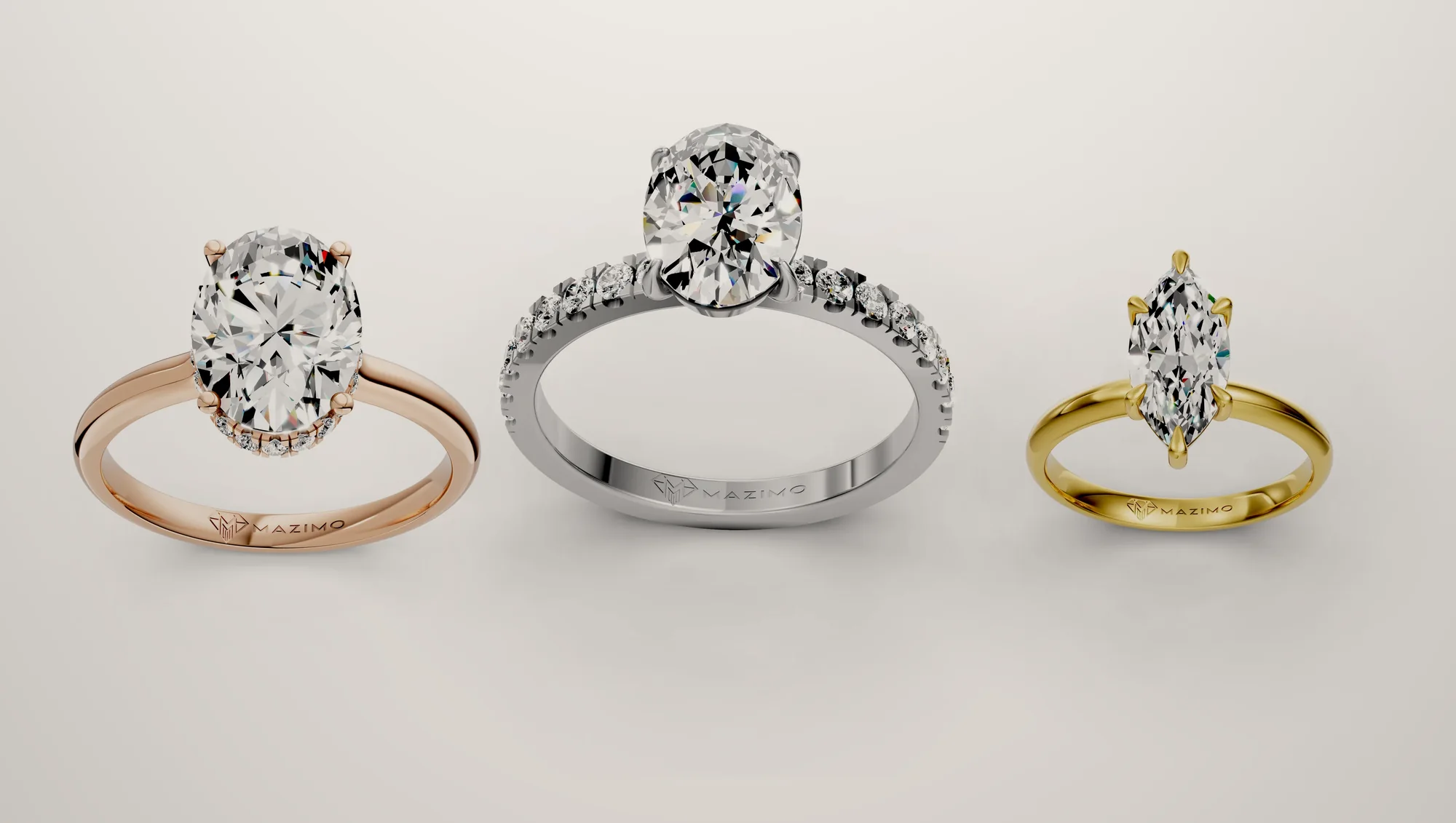
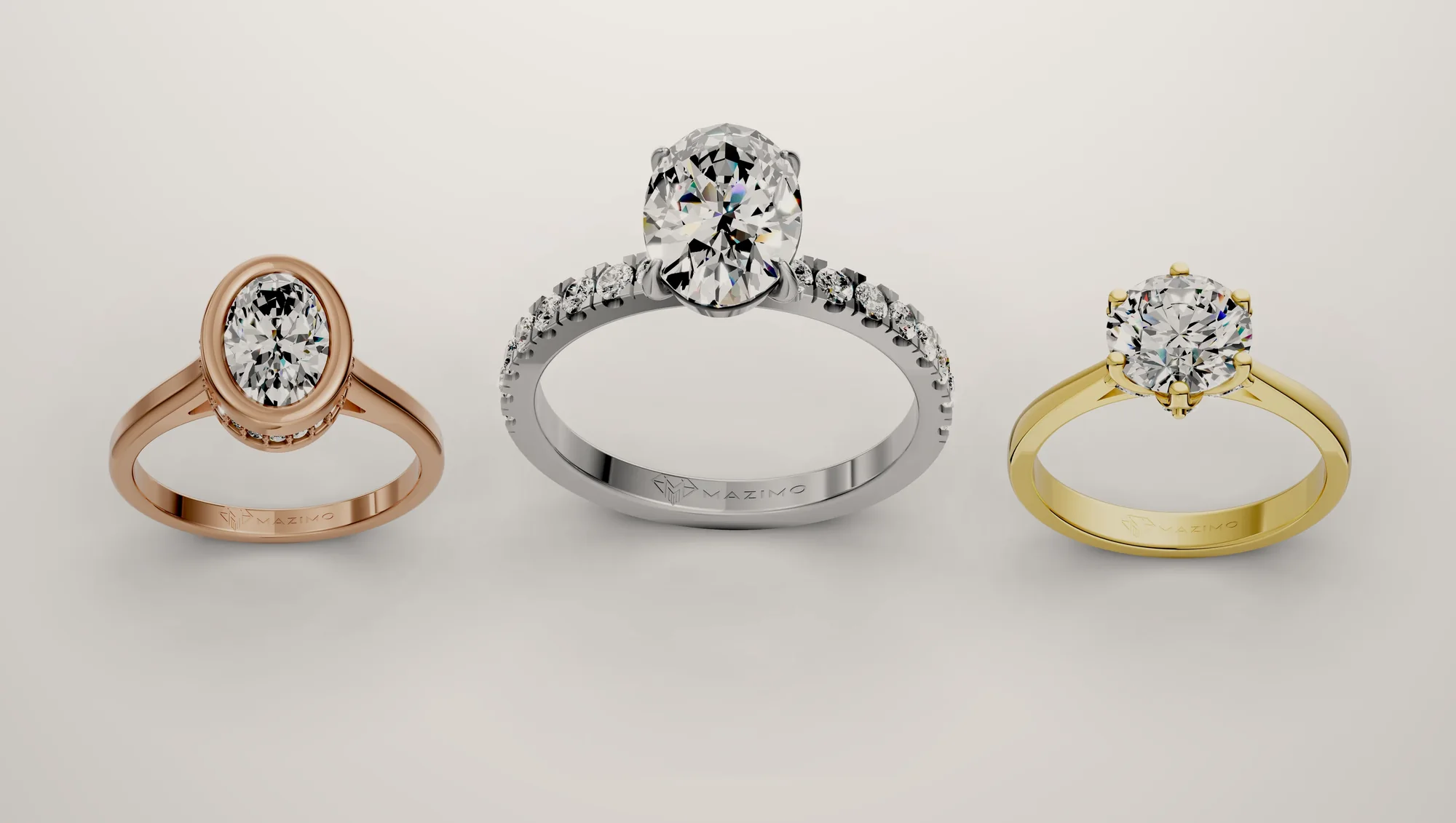
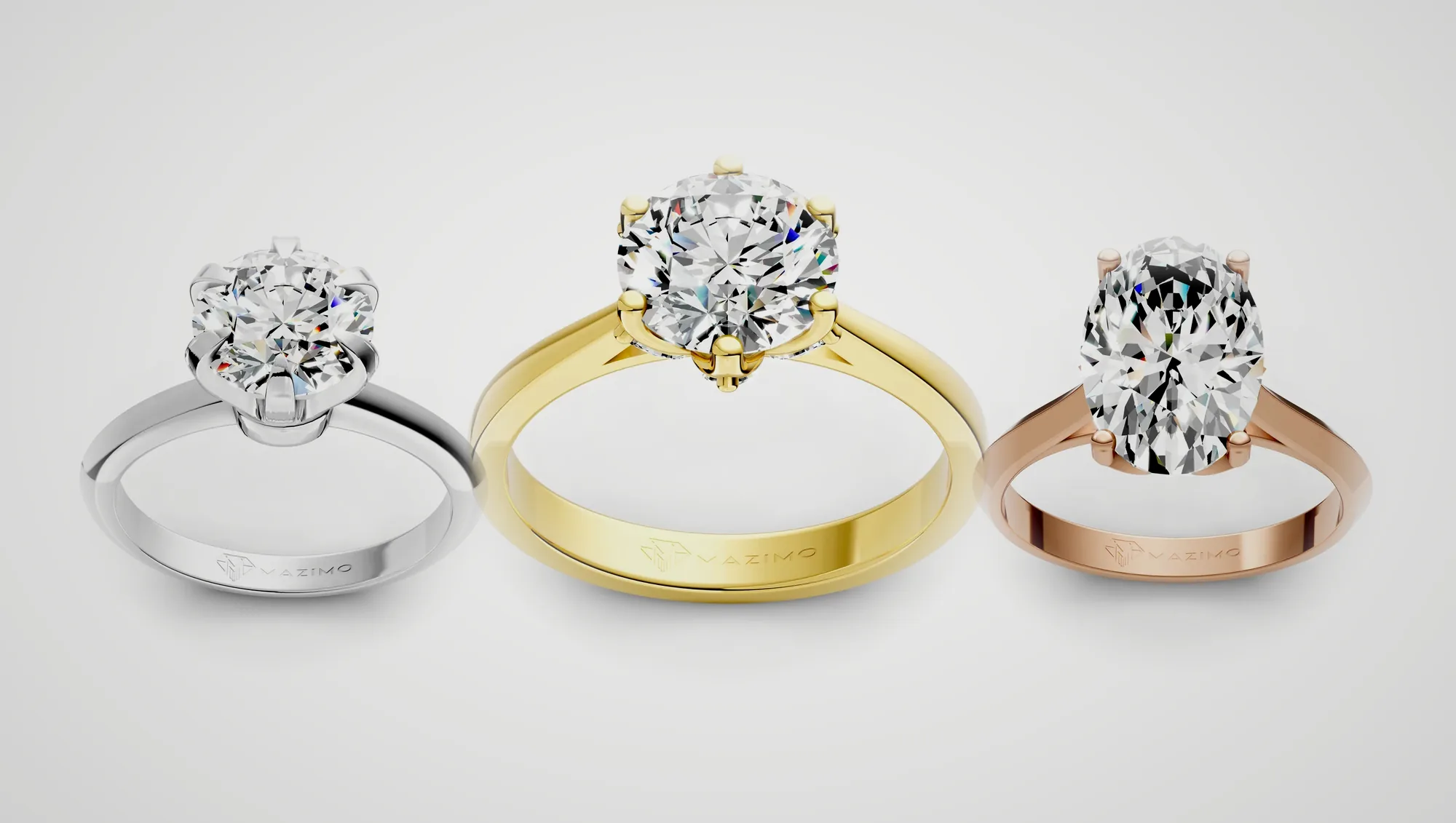
Each ring below can be made with a lab grown or a natural centre diamond, in 18K white, yellow or rose gold, and the pictures are renders.
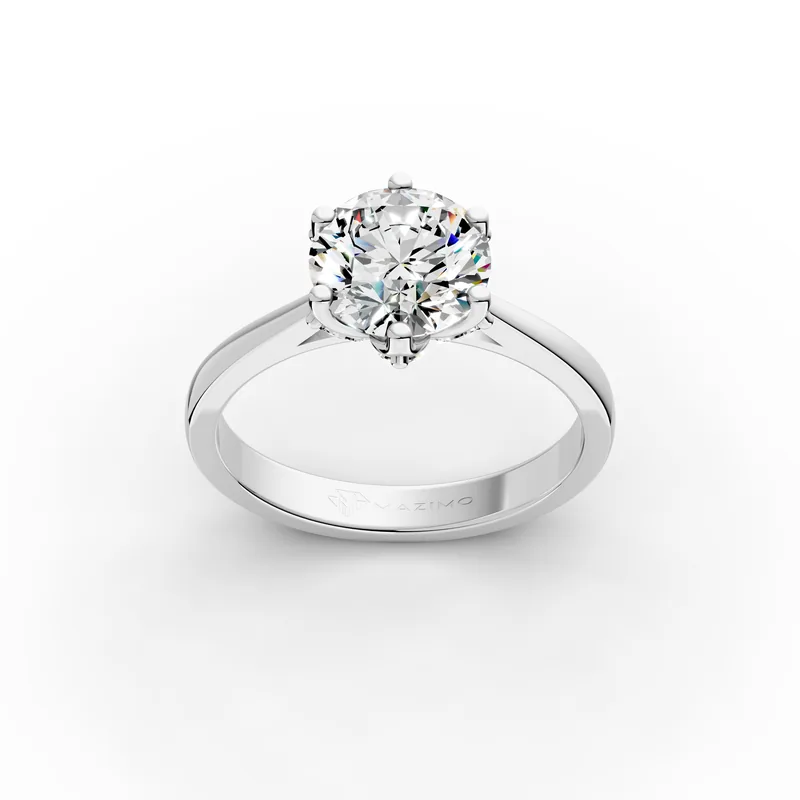 Round Six Claw Solitaire RingRound · 2 ct
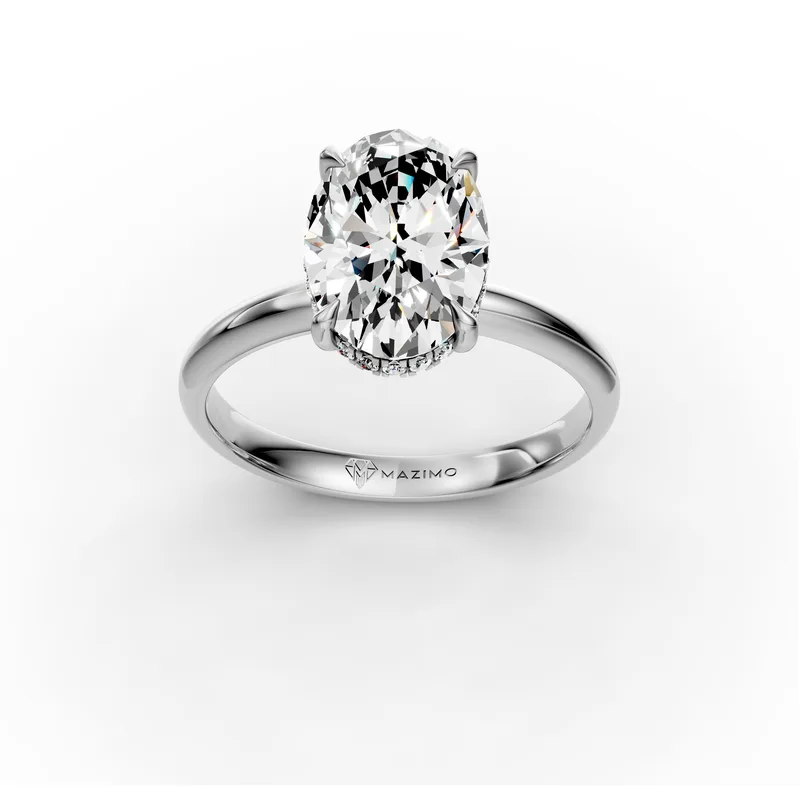 Oval Hidden Halo Solitaire RingOval · 2.5 ct
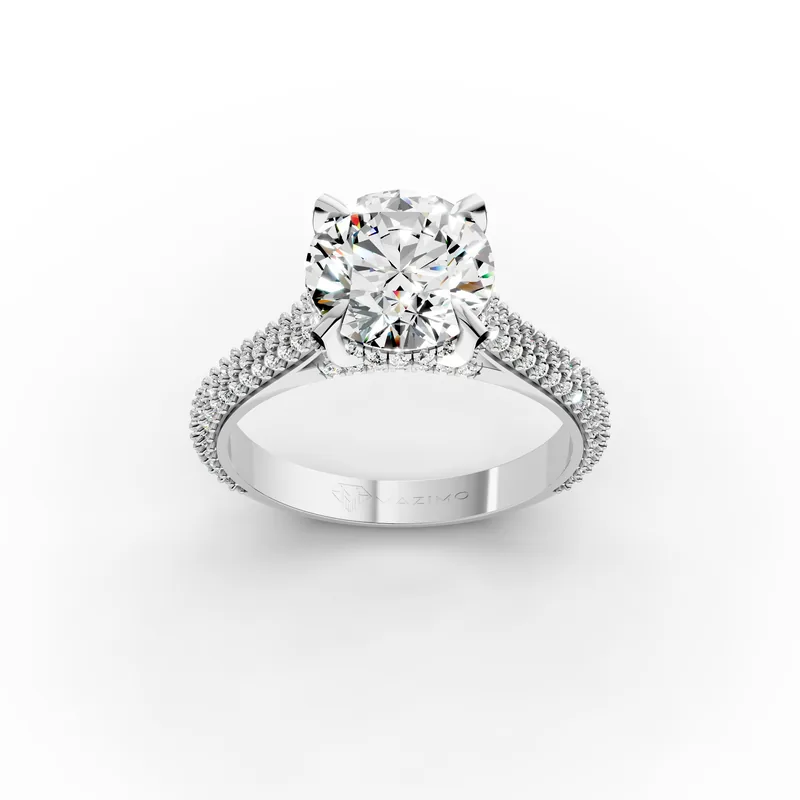 Round Pavé Solitaire RingRound · 2 ct
Our ring design guide walks through the designer, which shows a setting at true size and records your lab grown or natural choice. Open it with an oval solitaire with a lab grown diamond or an emerald three stone ring with a natural diamond, or book a private viewing at Al Manal Center, Deira.
Questions people ask
Is moissanite a lab grown diamond?
No. A lab grown diamond has the same crystal structure as a natural one and is rated 10 on the Mohs scale. Moissanite is a different mineral at 9.25, with more than twice the fire and a double image of the back facets. We give no price comparison.
Can a diamond tester tell moissanite from a lab grown diamond?
Not reliably. IGI says thermal testers often read moissanite as diamond, and electrical testers can mistake certain lab grown stones for moissanite. A tester result is not proof: ask for a laboratory report.
Can a jeweller tell lab grown from natural diamonds?
Not with ordinary instruments, GIA says, so ask for a laboratory report.
How can I tell if my diamond is real at home?
You cannot do so reliably. GIA says a loupe will not reveal a synthetic diamond and lists the fog, sandpaper, newspaper and sparkle tests as unreliable. A laboratory report is the dependable answer once you have checked its number on the laboratory's own site and matched the stone's measurements.
Is cubic zirconia the same as moissanite?
No. GIA rates cubic zirconia at 8.5 on the Mohs scale, with less brilliance than diamond. Moissanite is 9.25 with more than twice the fire.
At Mazimo. Choose a setting and a lab grown or natural diamond in our ring designer, then send the design on WhatsApp for the price. Our boutique is at Al Manal Center in Deira, minutes from the Gold Souk. The 18K gold is hallmarked in Dubai, and UAE delivery is insured. To read a grading report, see our guide to IGI and GIA certificates in Dubai.