
IGI Diamond Reports: What They Say and How to Check One
What an IGI diamond report records, how IGI grades natural and lab grown diamonds, what the LG inscription means, and how to check an IGI report number before you buy a diamond ring in Dubai.
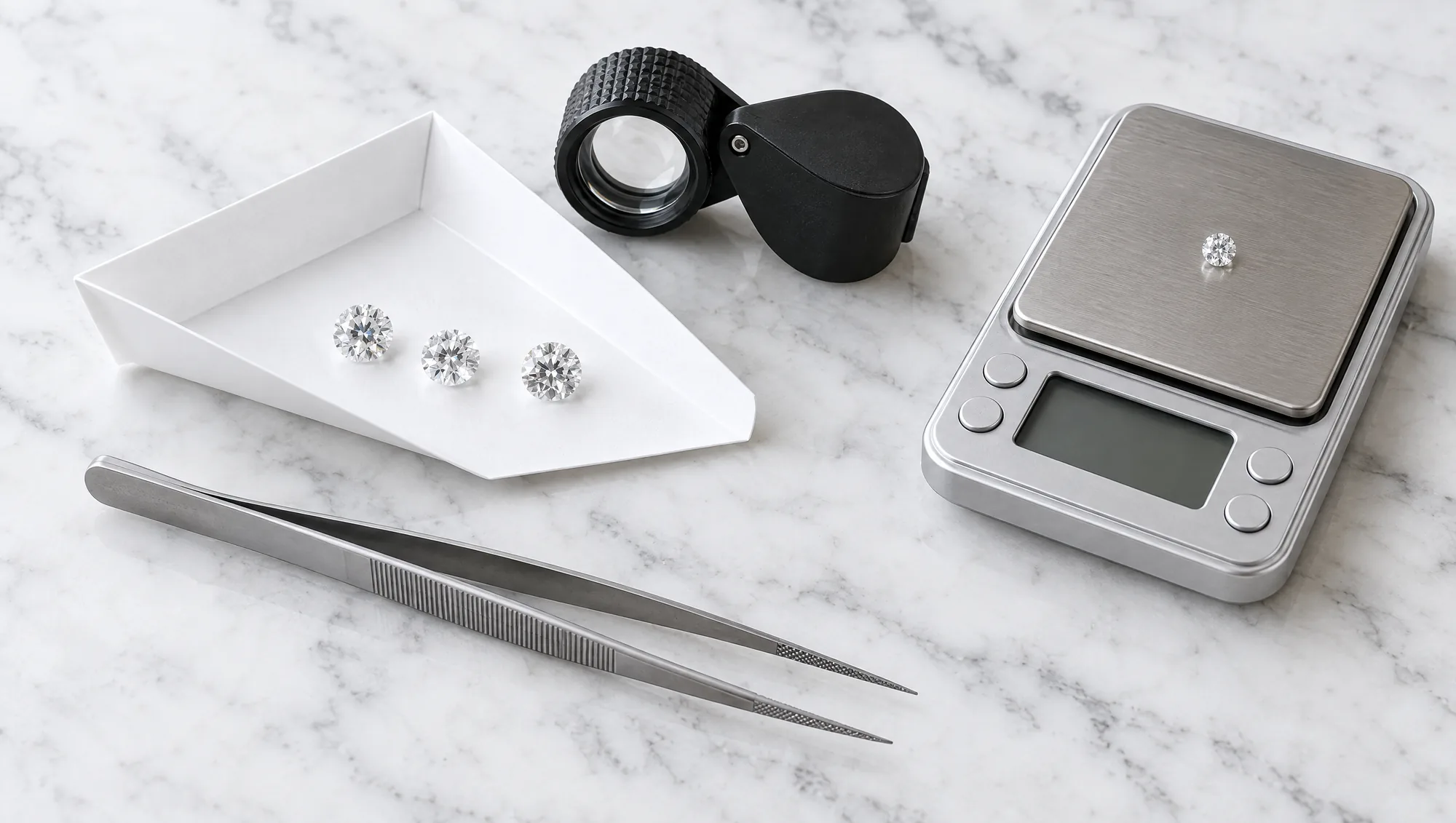

The International Gemological Institute was founded in Antwerp in 1975.
Colour on the same D to Z scale, with clarity from FL to I3, for natural and for lab grown stones.
On an IGI lab grown stone, look for LG before the report number on the girdle.
Enter the number in Verify Your Report on igi.org and compare every line with the paper.
An independent laboratory founded in Antwerp in 1975
The International Gemological Institute, IGI, was founded in Antwerp in 1975. It is an independent laboratory: it grades stones and does not sell them. Besides diamond grading reports it issues reports on coloured stones, identification reports on finished jewellery, appraisals and laser inscription, and it runs schools of gemology.
An IGI report is the one most often handed over with a lab grown diamond, because IGI grades most of the lab grown stones that are sold with a report. It grades natural diamonds too.
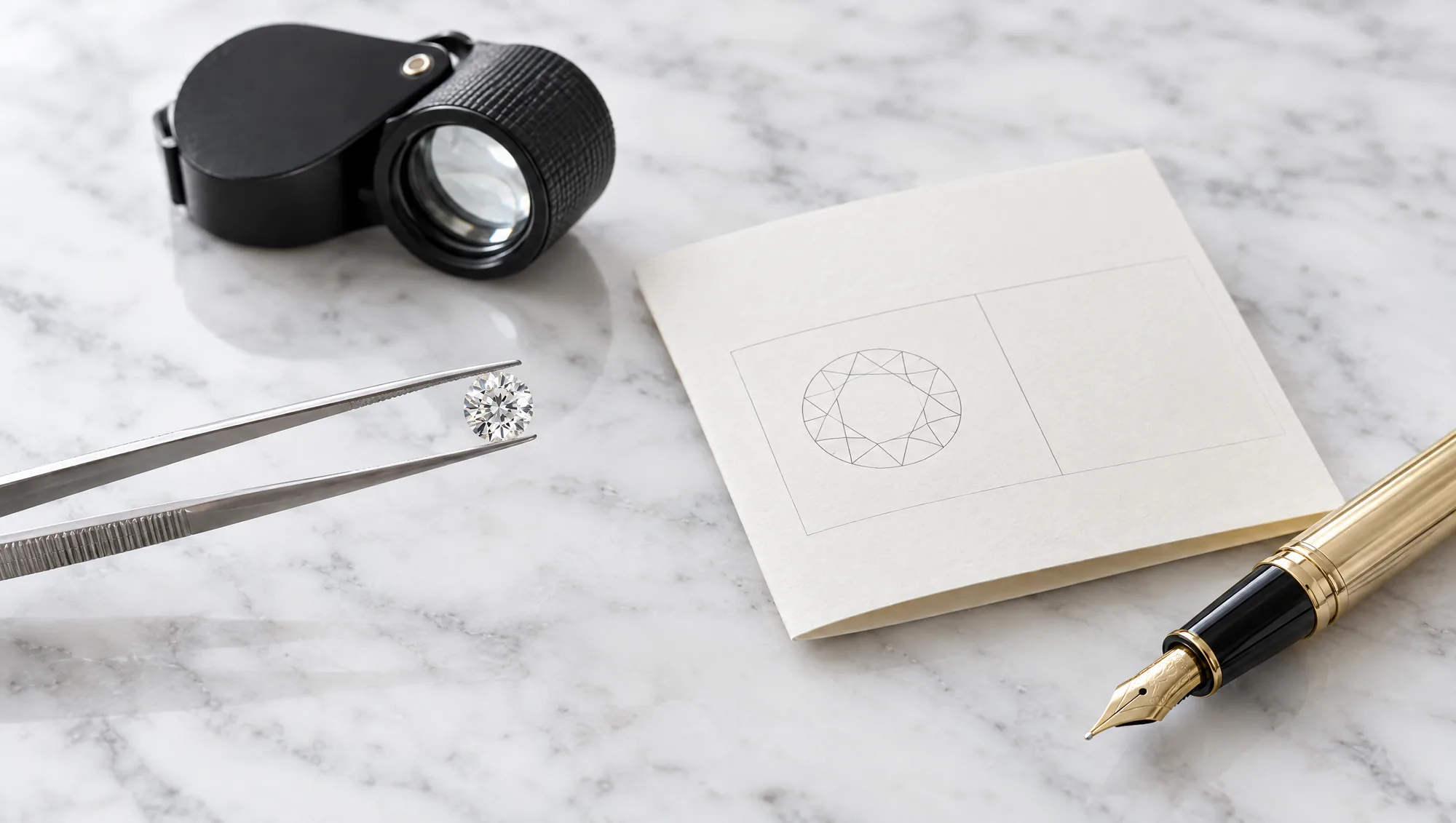
What an IGI report records
Like any grading report, an IGI report belongs to one stone and says nothing about a price. It records what the laboratory saw, and it prints a number you can verify.
- The report number and the date.
- The shape and cutting style, the measurements and the carat weight.
- The colour grade and the clarity grade, with a plot of the inclusions where the report has one.
- The cut, polish and symmetry grades where they apply to the shape.
- Whether the stone is natural or laboratory-grown, stated on the face of the report, and any note about treatment.
Natural and lab grown on the same scales
IGI grades natural diamonds and lab grown diamonds on the same D to Z colour scale and the same FL to I3 clarity scale. That is the opposite of GIA's current approach to colourless lab grown stones, which gives a Premium or Standard category instead of letters. A buyer who sees an E colour and a VS1 on an IGI lab grown report is reading a real grade; a buyer who sees the same letters quoted from a GIA lab grown report issued after 1 October 2025 should ask to see the paper.
Neither approach is better. They are two laboratories describing stones in two ways, and the only mistake is to compare a grade from one with a category from the other.
The cut grade: rounds, and some fancy shapes
IGI gives an overall cut grade on round brilliants and on some fancy shapes. Where the report has none, read the polish and symmetry grades and judge the outline with your own eye. Length to width ratio is what separates a slim oval from a short one, and a bowtie on a pear or a marquise is easiest to judge in person.
Our Journal guides to oval, pear, marquise and cushion cuts show what to look for in each shape.
Reading the origin line
A lab grown report says laboratory-grown on its face, and usually notes whether the stone was treated after growth. Post-growth treatment is the line to read twice, because two lab grown stones with the same colour letter can have reached it by different routes.
Only laboratory instruments can reliably tell lab grown from natural, so the origin has to be in writing twice: on the report and on the invoice. The invoice should name the laboratory, the report number, the shape, the weight, the grades exactly as the report gives them, and lab grown or laboratory-grown beside the stone. The word diamond on its own is not enough.
Match the report to the stone: LG and the number
IGI lab grown stones are normally laser inscribed on the girdle, the thin edge around the widest point, with LG before the report number. Many natural stones are inscribed too, although for them it is optional. You need a loupe of at least 10x, and every digit should match the report. A prong can hide part of the inscription once the stone is set, so read it before setting.
An inscription can be faked, which is why the number has to be checked online as well. Compare the weight and the measurements on the laboratory's page with the stone and the paper.
Check an IGI report in three steps
The paper alone proves nothing. Three checks make it mean something.
- Ask for the report number before you decide, and write it down.
- Type the address of the laboratory's own website yourself, igi.org, rather than following a link or a QR code printed on the paper, and use Verify Your Report. Compare the weight, the measurements and the grades with the paper, and save the result with your invoice.
- Read the girdle inscription under a 10x loupe and compare every digit and the LG with the report.
IGI and GIA side by side
For lab grown diamonds, IGI is the usual report and still gives full colour and clarity grades. For natural diamonds, GIA is the benchmark that much of the trade works from, and IGI grades natural stones too. On a lab grown stone, GIA inscribes the girdle with Laboratory-Grown and its number, and IGI inscribes LG and its number.
The same stone can be graded a notch differently by two laboratories, because grading is the opinion of trained graders against a master set. That is a reason to compare like with like, report with report, and not a reason to distrust either laboratory. Our GIA guide has the other half of this comparison.
Polish, symmetry and fluorescence: the lines people skip
Polish and symmetry describe the finish of the facets, how smooth the surface is and how exactly the facets line up, and an IGI report grades them on a scale from Excellent down. Where the report gives no overall cut grade for a shape, these two lines are the cut information you have.
Fluorescence is the glow some diamonds show under ultraviolet light. A report records how strong it is. In most stones it cannot be seen in daylight and is not a fault, but it is worth reading before the stone is set. Our Journal guide to diamond colour grades and fluorescence explains when it matters.
Five questions to ask before you pay
A report is only as useful as the questions you ask around it. These five take a minute and settle most doubts.
- Which laboratory graded this stone, and what is the report number?
- Is the origin on the report, natural or laboratory-grown, the same as the origin on the invoice?
- Does the girdle inscription, with its LG on a lab grown stone, match the report number under a loupe?
- Do the weight and measurements on the laboratory's own website match the stone and the paper?
- Does the invoice repeat the laboratory, the report number, the shape, the weight and the grades, word for word?
IGI reports at Mazimo
Mazimo makes diamond rings to order in Dubai in 18K white, yellow or rose gold, in ring sizes 46 to 62, and the first resizing is complimentary. Tell us you want an IGI report and we will confirm the report number for the stone before you decide, so that you can check it yourself on igi.org.
To read a report together, book a private viewing at the boutique at Al Manal Center in Deira, or send us the number on WhatsApp.

Questions we hear at the counter.
What does IGI stand for?
IGI is the International Gemological Institute, an independent laboratory founded in Antwerp in 1975. It issues diamond grading reports, coloured stone reports, jewellery identification reports and appraisals, and offers laser inscription.
Is an IGI report as good as a GIA report?
For lab grown diamonds, IGI is the usual report and still gives full colour and clarity grades. For natural diamonds, GIA is the benchmark. Either one beats a paper you cannot check.
What does LG mean on the girdle?
On an IGI lab grown stone, the girdle inscription normally starts with LG, followed by the report number. You need a loupe of at least 10x to read it.
How do I verify an IGI report?
Type igi.org into your browser yourself, use Verify Your Report with the report number, and compare the weight, measurements and grades with the paper. Save the result with your invoice.
Does an IGI report give a price?
No. It records what the laboratory measured and graded for one stone. A grading report is not a valuation.
Why can two laboratories grade the same stone differently?
Grading is the judgement of trained graders against a master set, so two laboratories can land a notch apart. Compare report with report and do not mix a grade from one with a category from the other.
Does the invoice need to say lab grown?
Yes. The invoice should name the laboratory, the report number, the shape, the weight, the grades as the report gives them, and say lab grown or laboratory-grown beside the stone. The word diamond on its own is not enough.
Can I ask Mazimo for an IGI report?
Yes. Tell us which report you want and we will confirm the report number for the stone before you decide.
Keep reading.
The other laboratory, side by side, and the rings to choose from.