DIAMONDS
27 September 2026
Yellow vs White vs Rose Gold Engagement Ring: How to Choose
All three are 75% gold. How 18K yellow, white and rose differ in upkeep, skin tone and diamond colour, and how each wears in the UAE's heat and pools.
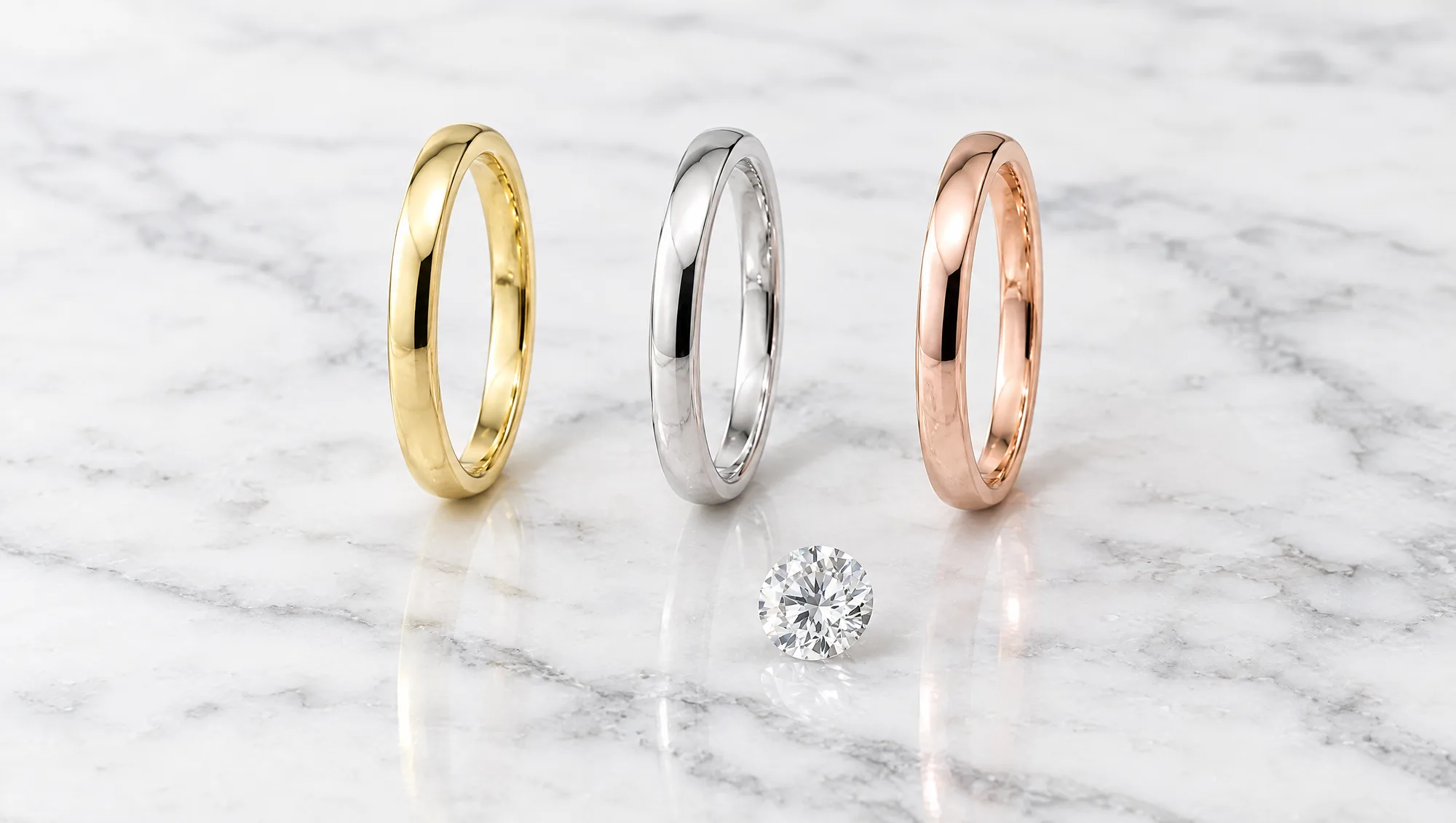
Most couples choose the diamond first and the metal last, then find the metal changes more than they expected: how white the stone looks, how the ring sits against the skin and how much care it needs through a Gulf summer. A Mazimo engagement ring is 18K in all three colours, so each is 75% gold. The difference is in the other quarter, and here is what it does.
Why an engagement ring is made in 18K
18K is 75% gold and 25% alloy, stamped 750 inside the band. The alloy makes it harder than 21K or 22K, so claws worn every day hold their shape and their grip on the stone, and it leaves enough room in the mix for a convincing white or rose. Our guide to gold karats and the comparison of 22K, 21K and 18K gold go into the detail.
How each colour is made
- Yellow gold. The alloy is mostly silver and copper, which keeps gold's natural colour while hardening it. 18K yellow is paler than the 21K and 22K in the souk windows, and the colour runs right through.
- Rose gold. Copper gives the colour, with a little silver; more copper means a pinker metal. It is real gold, hallmarked 750, and solid in colour with no plating.
- White gold. Gold alloyed with white metals such as palladium or nickel comes out a pale, warm grey. The finished ring is plated with rhodium, a bright white metal, and the plating is what you see.
White gold needs re-plating
The rhodium layer is about a thousandth of a millimetre thick at most. On a ring worn daily it wears first under the band, and the warm grey shows through. Many rings worn every day need re-plating every year or two; we quote it before the work starts. If you react to nickel, ask which white alloy the ring will be cast in.
How the metal changes the diamond's colour
Diamonds are graded for colour from D, fully colourless, down the alphabet as a faint yellow tint appears. The metal reflects into the stone. White gold adds nothing, so it shows a D to F diamond at its whitest, but it also reveals a tint in a lower grade.
Yellow and rose gold add warmth of their own, and a stone graded G to J looks at home in them. Choose the metal and the grade together: for the iciest look, white gold with a high grade; in yellow or rose, put the difference into carat or cut. Either way, ask for the grade in writing.
Which colour flatters your skin
The old rule sorts by undertone. Look at the veins inside your wrist in daylight: blue or purple suggests a cool undertone, which white gold tends to flatter; green suggests a warm one, which suits yellow; a mix means all three work. Rose gold is the most forgiving, warm on fair skin and glowing on deeper tones.
Treat this as a starting point: yellow is rich on tan and deep skin, but white gives a crisp contrast there too. The real test is a hand like yours. Our designer shows the ring at true size on four skin tones, Fair, Medium, Tan and Deep, and lets you switch the metal with the hand in view.
Living with it in the UAE climate
- Chlorine. Chlorine in pool and spa water can attack the alloy metals in gold and, with repeated exposure, weaken claws. Take the ring off to swim.
- Sweat and sunscreen. Salt and oils dull the surface quickly in summer, and the copper in rose gold can deepen its colour slightly over time; a polish brings the original tone back.
- Perfume and hand cream. They leave a film on the diamond and dull the metal. Put them on first and the ring on last.
Every 18K ring scratches. A polish restores yellow and rose; on white gold a deep scratch can cut through the plating. We clean and polish Mazimo rings free for life, and our guide to gold care in the UAE climate covers the habits.
Matching the wedding band later
The simplest rule is same colour, same karat: two 18K rings wear at the same rate and read as one piece. Mixing can look deliberate too: a yellow band beside a white engagement ring, for example. If both are white gold, have them re-plated together so the whites stay identical. Our wedding band guide covers widths and fit.
The three side by side
| 18K colour | Colour comes from | Upkeep | Effect on the diamond |
|---|---|---|---|
| Yellow | Silver and copper, solid through | A polish now and then | Warmer; G to J grades look at home |
| White | White alloy under rhodium plating | Re-plating every year or two | Whitest; shows D to F grades at their best |
| Rose | Copper, solid through | A polish now and then | Warm; hides a faint tint |
Yellow gold has been gaining ground in engagement rings for several years, and the oval is one of the most requested shapes in Dubai. White gold remains the classic choice for a solitaire, and rose gold has a loyal following of its own. But a trend is a weak reason to choose a ring for life.
A better test: open the same 1.00 ct lab-grown oval solitaire, about 7.7 × 5.7 mm, in 18K yellow gold, 18K white gold and 18K rose gold. Set the skin tone closest to yours and judge from arm's length, as others will.
Questions we hear at the counter
Is rose gold real gold? Yes. 18K rose is 75% gold, like yellow and white, with the same 750 hallmark. Only the alloy differs.
Does white gold turn yellow? Its natural warm grey shows as the rhodium wears, often within a year or two of daily wear. Re-plating restores the white.
Does the colour change the price? The gold content is the same, 75%, whichever colour you choose, but the alloys and the finish differ, so we quote the finished ring on WhatsApp.
At Mazimo. Design the ring on a hand at true size in our ring designer and send it to us on WhatsApp for the price, or come and see stones and settings at Al Manal Center, Deira, a few minutes' walk from the Gold Souk. Every ring is made in 18K gold, hallmarked in Dubai, and delivered insured across the UAE at no charge.