DIAMONDS
06 October 2026
White Gold Rhodium Plating: Care and Re-Plating in UAE
18K white gold is solid gold under a thin rhodium coat that wears. Why it turns warm, what re-plating involves and how to care for it in the UAE.
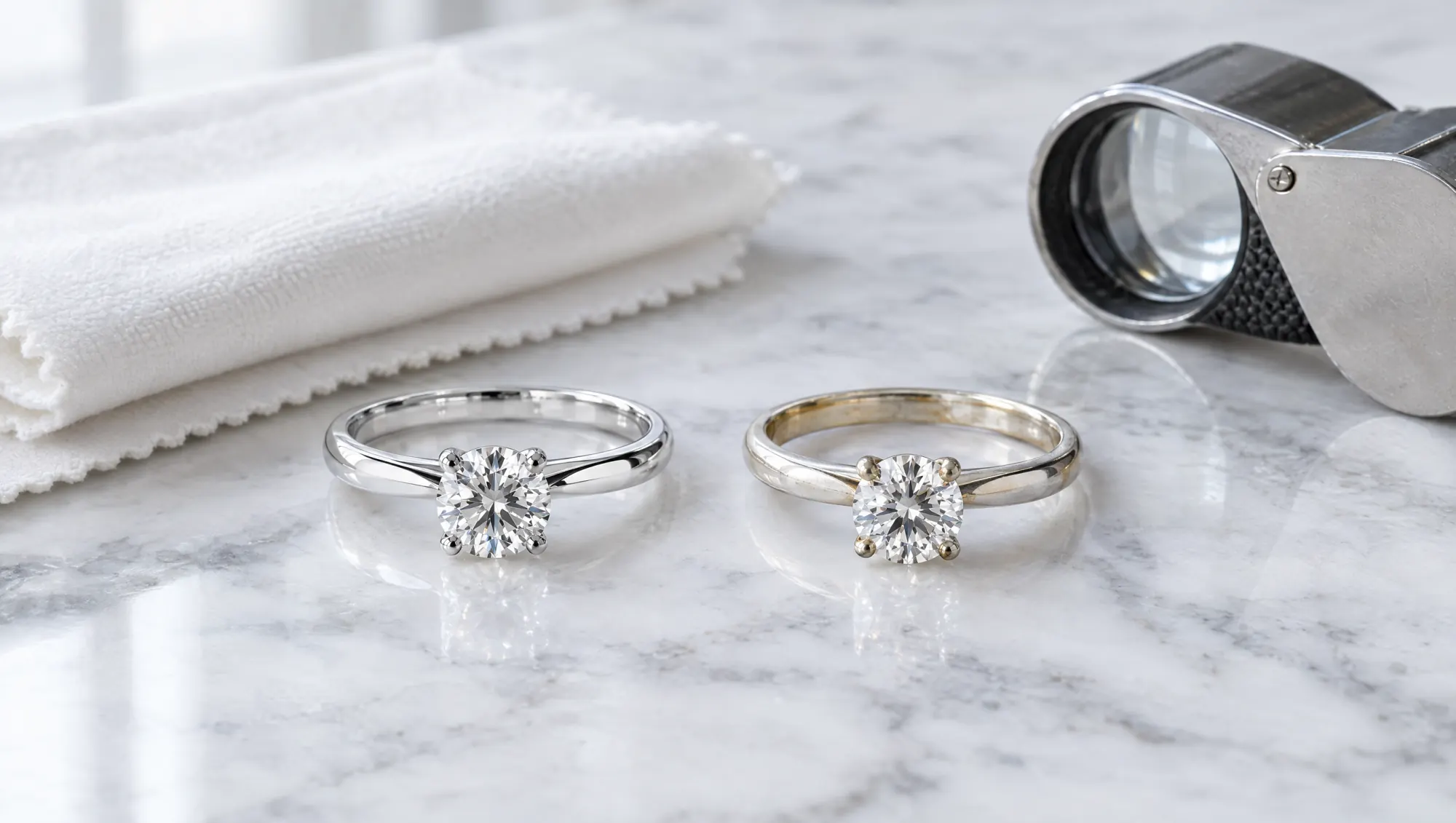
White gold can turn warm over time, and that does not mean the ring is fake or tarnished. 18K white gold is solid gold, 75% pure gold, finished with a very thin coat of rhodium that gives it its bright white colour. The coat wears with use, usually first on the underside of the band and on the claws, and a jeweller can renew it by re-plating.
Solid gold underneath, rhodium on top
The 18K stamp describes the metal, not the coat: three parts in four are pure gold and the rest is other metals that whiten and harden it. GIA says white gold is made by alloying gold with white metals such as nickel, palladium and zinc, and that it is usually plated with rhodium for a whiter look. Rhodium is a bright white platinum-group metal, laid on as a coat thin enough to wear away.
The gold goes all the way through, unlike gold-plated jewellery, where a thin layer of gold covers a base metal.
Why white gold is plated
Pure gold is yellow, and white metals pale it without making it white. Left unplated, most white gold has a slightly yellowish or grey tint and looks duller than platinum or silver. Rhodium gives the cool, mirror-white shine of a solitaire, and GIA adds that it helps protect against scratching. For how each metal colour changes the diamond, see our guide to yellow, white and rose gold engagement rings.
Why the plating wears
A ring is handled all day and the coat is very thin. These wear the coat or attack the metal under it:
- Friction. The underside of the band rubs against skin, bags and other rings, and the claws take every knock.
- Skin chemistry and sweat. Some skin wears plating faster than others, and a Dubai summer adds sweat.
- Chlorine and harsh chemicals. GIA's care chart warns, under yellow gold, that they can damage the alloying metals. White gold has copper and zinc in its alloy too, so we treat it the same way.
- Perfume, hand sanitiser and creams. They leave a film and put chemicals on the metal. Put them on first and the ring last.
- Abrasive cleaning. Toothpaste, baking soda and harsh cleaners scrub the surface, and ultrasonic cleaners are not for set stones.
What you will see, and what it is not
The first sign is a warm cream or grey tint where metal rubs or gets knocked: the underside of the band and the claws. It is the alloy showing through, not tarnish. Wash it before you judge, because soap and hand cream can make a well-plated ring look dull.
| What you see | Likely cause | What to do |
|---|---|---|
| Dull or cloudy, and the tint washes off | Soap, cream or skin oil | Wash in warm water with mild dish soap and a soft toothbrush, rinse and pat dry |
| Warm tint on the underside and claws that stays after washing | Rhodium worn thin | Ask about re-plating |
| A claw that moves or a stone that rattles | Wear on the setting, not the plating | Stop wearing it and bring it in; our warranty lists an annual check of settings on diamond and zircon pieces |
How long plating lasts
No single interval fits every ring. Robinson's Jewelers, a US retailer, suggests re-plating rings every 12 to 18 months, bracelets every 18 to 24 and pendants and earrings every two to three years, and says it depends on how often you wear the piece and what it meets: hand washing, lotions, cleaning products. GIA gives no interval, only to ask your jeweller whether they will replate the ring when needed.
Use the tint, not the calendar: when the warmth stays after a wash, it is time. A ring worn only on occasions needs it far less often.
How re-plating is done
At a typical jeweller's bench it runs in four steps:
- Clean. Oils, dirt and polishing residue come off so the new coat can take.
- Repair and check. Claws, worn tips and any resizing are dealt with first, because plating is the last step: heat and polishing would damage a fresh coat.
- Polish. The surface is brought to a high shine and light scratches come out.
- Plate. The ring is dipped in a rhodium solution and a new coat is electroplated on.
Plating changes colour only. It cannot rebuild a worn claw or a thin band, which is why the settings check comes first. Polishing can thin the coat along with the scratches, so after any polish of a white gold ring, ask whether it should be re-plated at the same visit.
Our diamond ring pages say that Mazimo's white gold is rhodium plated and is re-plated over time. For re-plating, ask the boutique in Deira about cost and turnaround before you plan around it; repair work outside the warranty is quoted before we start.
Habits that make plating last in the UAE
- Pool, spa and sea. Take the ring off before you swim.
- Gym, cleaning, cooking and showers. Take it off first; soap and shampoo leave a residue that dulls the shine.
- Storage. Keep it in its pouch, apart from other pieces.
Our jewellery care guide covers the routine, and the piece on daily gold care in the UAE climate covers heat, humidity and sand.
If you want no plating at all
| Choice | Plating to renew? | What to expect |
|---|---|---|
| 18K white gold, rhodium plated | Yes, when the tint shows | Bright white from the start; re-plating now and then |
| 18K white gold, left unplated | No | The alloy's own colour, slightly warmer and duller |
| 18K yellow or rose gold | No: the colour runs through | A polish when it dulls; the colour stays |
| Platinum | Not normally: it is white throughout | Not in our ring designer; ask the boutique |
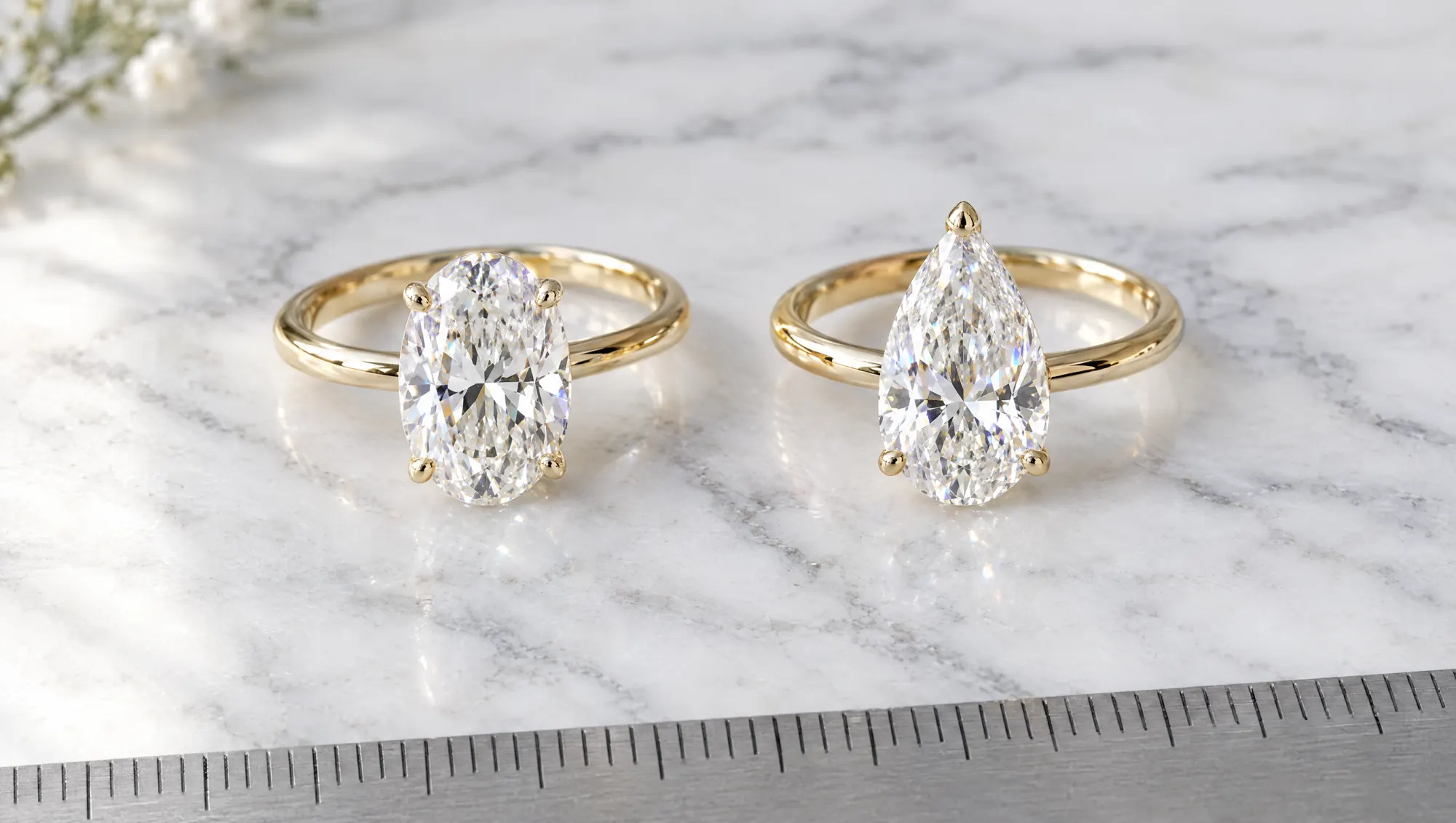
For upkeep, white gold against platinum comes down to the coat: white gold needs it renewed, platinum does not normally have one, though every metal still scratches. Our ring pages describe our white gold as rhodium plated, so ask the boutique if you would rather have it left unplated, or if platinum matters to you: our designer shows 18K white, yellow and rose gold only. To judge a colour, open a 1.00 ct oval solitaire in white gold (about 7.7 × 5.7 mm), then switch the metal to yellow or rose.
Skin sensitivity and the alloy
The alloy under the coat can contain nickel. GIA's care chart lists nickel or palladium, copper and zinc as the alloying metals in white gold and says to avoid it if you are allergic to nickel or copper, suggesting platinum instead. DermNet NZ says the initial plating protects against the nickel in the gold but wears off over months or years, and that palladium-based white gold alloys exist and cost more than nickel ones.
A 1984 study in Contact Dermatitis (Fischer and colleagues) used white gold discs containing 2 to 15% nickel. Rhodium plating reduced the nickel released into synthetic sweat but did not stop it, and all 18 nickel-sensitive women patch-tested with the discs reacted to at least one. Plating buys time; it is not a reason to ignore the alloy if you react to nickel.
We do not publish which white alloy each ring is cast in. If you react to nickel, tell us before a ring is made and ask which alloy it will be cast in. Our guide to how a custom diamond ring is made shows when a ring is cast.
White gold at Mazimo
Browse our 18K white gold solitaires or our diamond rings, made to order in 18K white, yellow or rose gold, or book an appointment to talk through the metal, the alloy and plating. Lifetime cleaning and polishing at the boutique are part of our warranty.
Questions people ask
Does white gold turn yellow?
Not by itself, but the thin rhodium coat wears and shows the alloy's slightly yellowish or grey tint. It appears first on the underside of the band and on the claws, and re-plating restores the white.
How often should I re-plate white gold?
There is no fixed interval. One US retailer's guide suggests every 12 to 18 months for a ring, but it depends on how you wear it and on your skin. Re-plate when the warm tint stays after you have washed the ring.
Can I wear a white gold ring in the pool?
It is better not to, and we advise taking the ring off before you swim. GIA's care chart warns that chlorine and harsh chemicals can damage the alloying metals in yellow gold, and white gold shares copper and zinc in its alloy.
Does Mazimo re-plate white gold?
Ask the boutique. Our ring pages say white gold is rhodium plated and re-plated over time, and any work outside the warranty is quoted before we start.