GOLD RATES
06 October 2026
Selling or Exchanging Old Gold in Dubai: What You Get
How old gold is valued in Dubai: pure gold by karat, what buyers deduct, cash versus exchange, and how to get a fair offer before you sell.
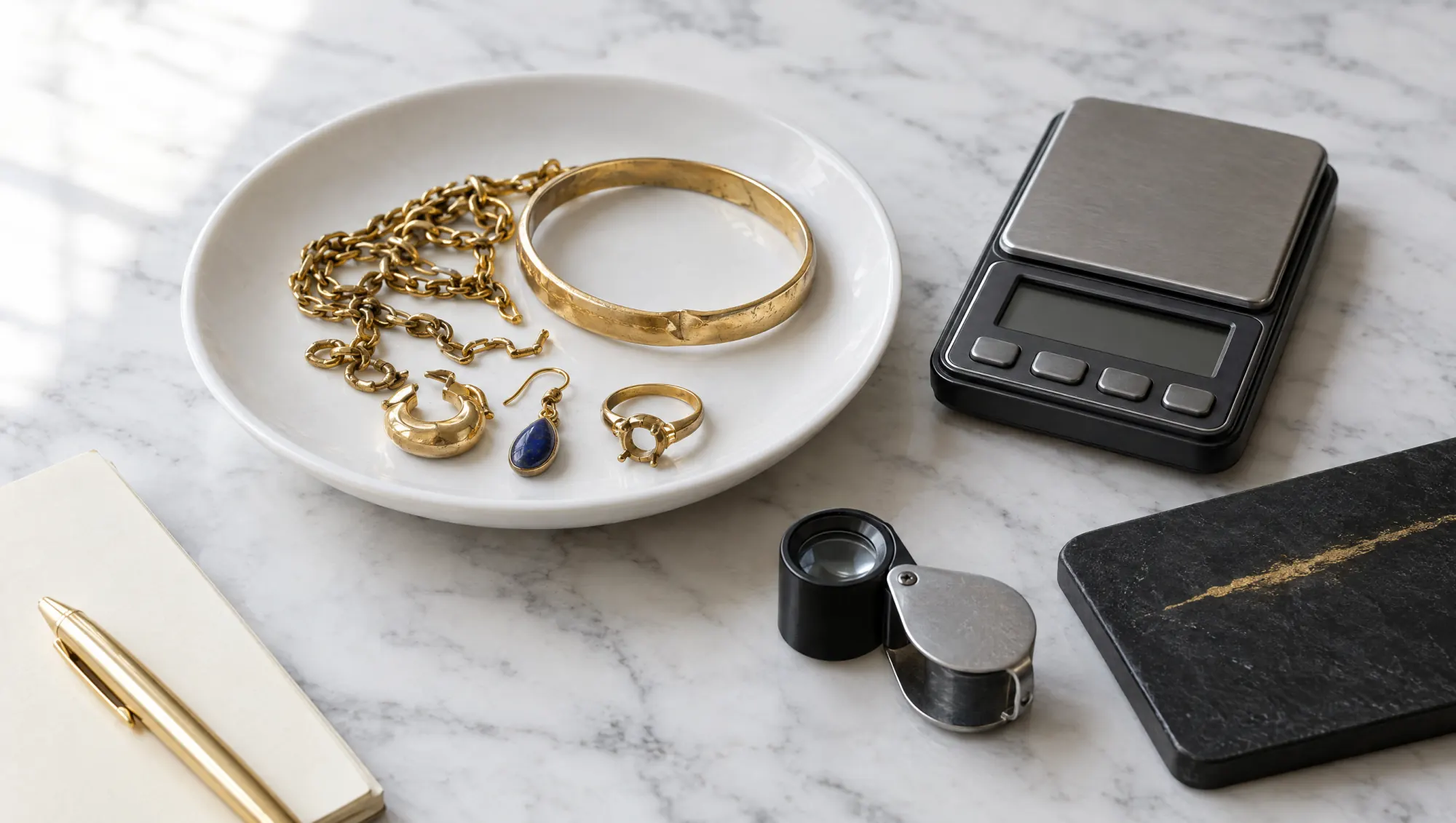
When you sell old gold in Dubai, you are paid for the gold in the piece, by weight and karat, at the day's rate, not for what you paid for it. The buyer weighs the piece, tests the karat, takes off the weight of any stones and prices the rest, and the making charge on your original bill is not part of that price. Deductions differ from buyer to buyer, so compare two or three licensed buyers on the same day and ask for every deduction in writing.
How a piece is valued
Most buyers follow the same four steps:
- Weigh. The whole piece goes on the scale. Read the display yourself.
- Test the karat. The buyer reads the stamp (750, 875 or 916) and checks it. Buyers commonly use a handheld X-ray fluorescence (XRF) analyser, which reads the metals in a piece without damaging it; some use acid on a touchstone.
- Take off what is not gold. Stones weigh something too, so their weight comes off first. A carat is 0.2 g, so a 1.00 ct diamond takes 0.2 g off. Set stones cannot be weighed on their own, so ask how the figure is reached.
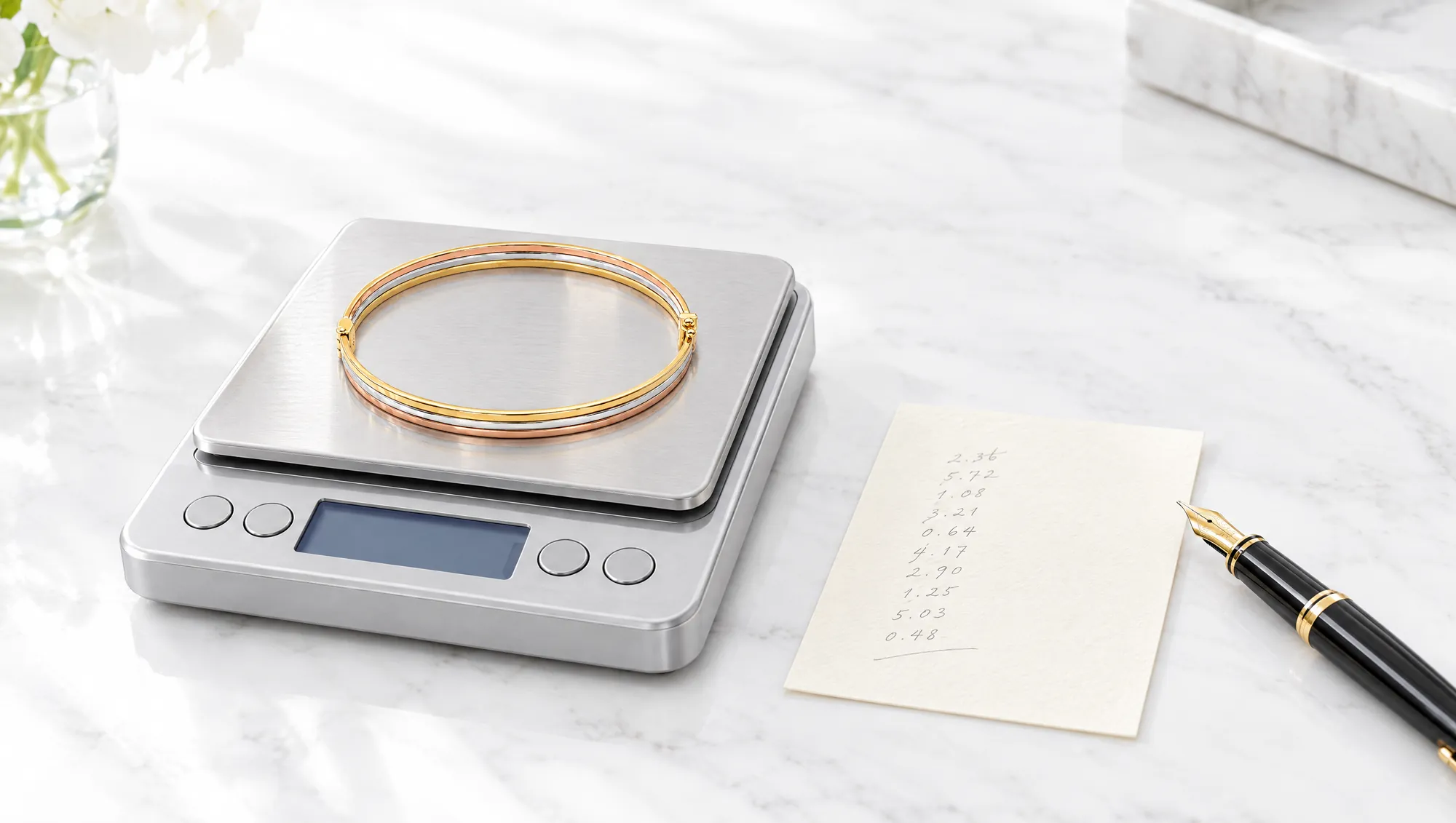
- Apply the rate for that karat. The metal weight is multiplied by the day's per-gram rate for 18K, 21K or 22K. That rate already allows for the alloy. It moves during the day, so quotes only compare on the same day. Today's figures are on the Dubai gold rate page.
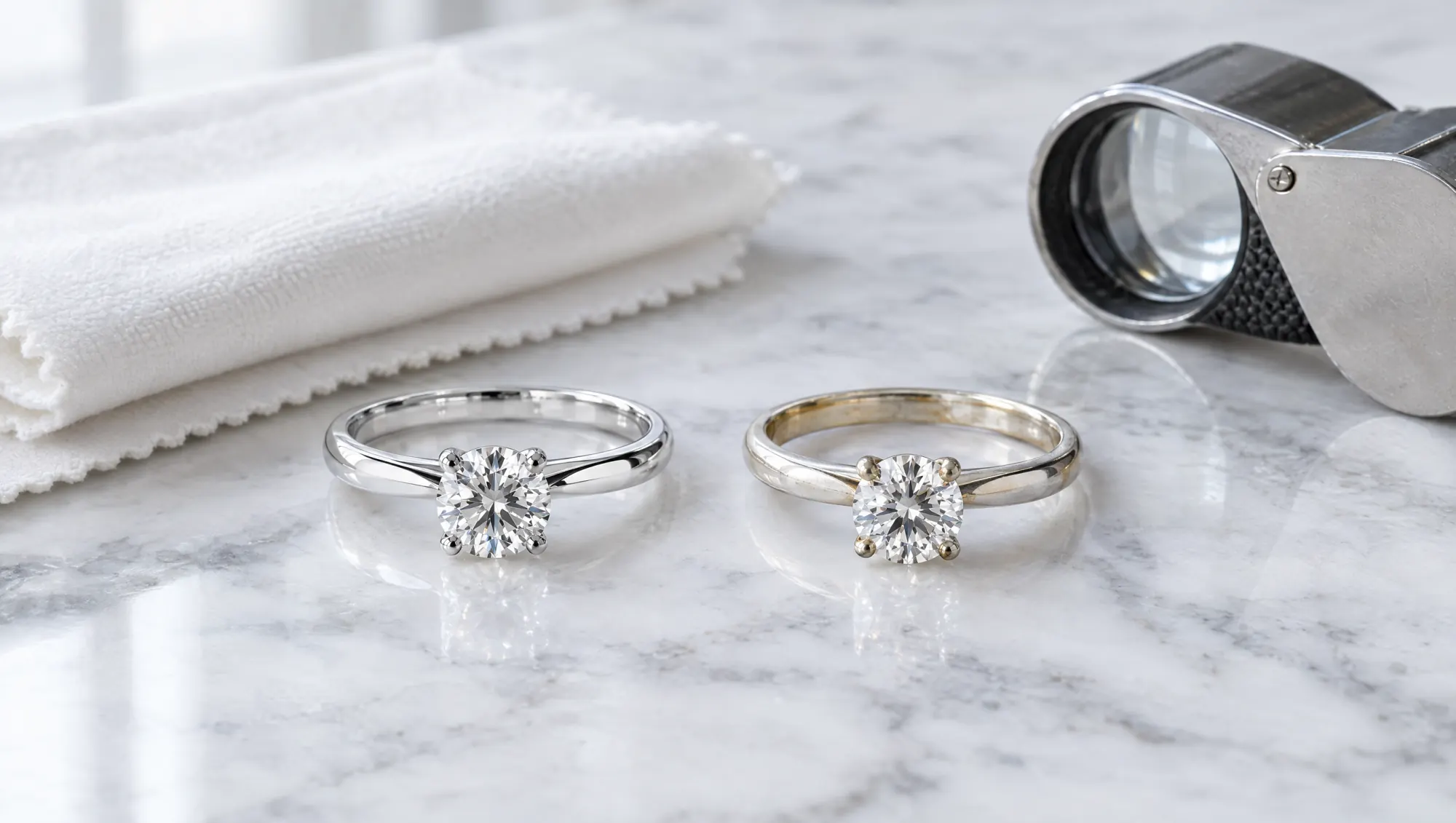
Know the limits of the test. GIA's laboratory has reported gold plated over lower-karat gold where XRF read the higher karat of the plating, and advises examining the piece under a microscope (GIA, Gems & Gemology, Summer 2025). If a result comes out lower than the stamp, ask to see the reading and get a second opinion. Our guide to verifying gold purity in the UAE explains the tests.
Pure gold by karat: why the same grams are worth different amounts
Karat is the share of pure gold in 24 parts, and the stamp gives it in parts per thousand: 750 for 18K, 875 for 21K, 916 for 22K, 999 for 24K. The rest is alloy, which a buyer does not pay for as gold.
| Karat | Stamp | Pure gold in 10 g | Pure gold in 20 g |
|---|---|---|---|
| 18K | 750 | 7.50 g | 15.00 g |
| 21K | 875 | 8.75 g | 17.50 g |
| 22K | 916 | 9.16 g | 18.32 g |
| 24K | 999 | 9.99 g | 19.98 g |
Take two 20 g pieces: the 18K chain holds 15.00 g of pure gold and the 22K bangle 18.32 g, about 22% more. That is why each karat has its own rate; see the per-gram figures for 18K and 22K.
What a buyer may deduct, and why
Buyers often pay less than the full rate, because they have to turn your piece into something they can resell. Deductions you may meet:
- Melting or refining loss. Some buyers melt and refine what they buy, lose a little metal on the way and price that in.
- Testing or handling. Some charge a small fee or build it into the rate they quote.
- Stones. Their weight comes off, and whether they are valued at all is a separate question.
These are commercial conventions, not fixed rules, and they differ between buyers, so no single percentage is the right one: any figure you read online is one buyer's practice. Ask how each deduction is taken (grams off the weight, a percentage or a flat fee). In its 1 October 2026 piece on selling gold, Gulf News advises getting the buyer's policy in writing and keeping your invoice.
Why the making charge is not paid back
Your bill was the gold at the day's rate plus a making charge, the cost of designing, casting and finishing the piece. That charge paid for the work, not for gold, so a buyer pricing by gold content has nothing to set against it, and you are offered less than you paid even when the gold rate has not moved.
Gulf News worked one example: a 20 g 22K necklace bought with a 20% making charge and 5% VAT on the bill. Sold back at the same gold rate for its gold alone, it returns about 20.6% less than the bill, and gold would need to rise roughly 26% to close the gap.
Pieces with a lower making charge, usually plainer designs, lose less. Our guides to making charges against the gold rate and buying gold jewellery to keep its value go further.
Cash or exchange for a new piece
Cash is simple: the buyer pays the offer and you walk away. An exchange credits the value of your old gold against a new piece, so you pay only the difference. Cash suits you if you do not plan to buy; exchange suits you if you were going to buy anyway, since it is done in one visit.
Gulf News warns that a promise of full gold value may mean exchange credit rather than cash. It adds that retailers' stated terms can leave the original making charge and taxes out of exchange valuations and apply a separate deduction to cash buy-back, and that an exchange can mean paying fresh making charges and VAT on the new piece. Ask for the cash offer, the exchange credit and the new piece's price together and compare them.
How to get a fair offer
- Compare two or three licensed buyers on the same day. Deira has many gold buyers close together, which makes this practical.
- Insist on weighing in front of you, on a scale whose reading you can see, and keep the piece in view until the deal is done.
- Ask how it was tested and see the result.
- Ask which rate is used, the day's standard rate for the karat or a lower buying rate, and get the final amount for your piece in writing before you agree. A headline rate means little until you see the deductions.
- Be ready to walk away. A quote does not oblige you to sell.
What to bring and what to expect
- Photo ID. Bring your Emirates ID, or your passport if you are visiting. Dealers in precious metals and stones must identify and verify their customers and keep records for at least five years, so a licensed buyer will normally ask to see it.
- The original invoice or certificate, if you still have it. It shows the karat and weight you were told.
- Every part of the lot: the snapped chain, the odd earring, the loose clasp. Gold is bought by metal content, so these still count.
Large cash deals are reported. The Ministry of Economy and Tourism's March 2026 guidance for dealers (PDF) says dealers must file a report on any cash transaction of AED 55,000 or more with an individual, and tells them to apply risk-based checks below that figure too.
Before you hand anything over, get a receipt with the date, weight, karat, rate used, each deduction, the total and the buyer's name. Keep it.
If it came from Mazimo
Mazimo buys back its own pieces and gold from any jeweller. The gold is tested and weighed in front of you and bought at the prevailing Dubai rate for its karat on the day, or credited against a new Mazimo piece. The wording is on our returns, buy-back and repairs page and services page.
Keep two things apart. The 48-hour exchange covers unworn pieces in their original packaging and closes 48 hours after delivery; buy-back is a separate route, priced at the prevailing rate for the karat. If you still have your Mazimo invoice, bring it: it prints the karat and weight checked at handover. Come to the boutique at Al Manal Center in Deira during opening hours, or message us on WhatsApp first. If a Mazimo ring simply does not fit, the first resizing is complimentary, so selling may not be needed.
Questions people ask
How much is my old 18K gold worth?
Its weight in grams, less any stones, multiplied by the day's 18K rate, less the buyer's deductions. 18K is 75% pure, so 10 g holds 7.5 g of pure gold. The live figure is on the 18K gold rate page.
Do buyers pay for diamonds and other stones in old jewellery?
Gold buyers price the metal, and the stones' weight comes off first. Whether the stones are valued separately depends on the buyer and the stones, so ask before you agree.
Can I sell broken or single pieces?
Generally yes. A buyer values the gold in the piece, so a snapped chain, a dented bangle or a lone earring still counts by weight and karat.
Does Mazimo buy gold bought from another jeweller?
Yes. Gold from any jeweller is accepted, tested and weighed in front of you.