DIAMONDS
17 October 2026
Diamond Cut Grade: Excellent vs Ideal and Fancy Shapes
GIA gives a cut grade to round diamonds only. See how GIA, IGI and AGS scales differ, and how to judge an oval, pear or marquise without one.
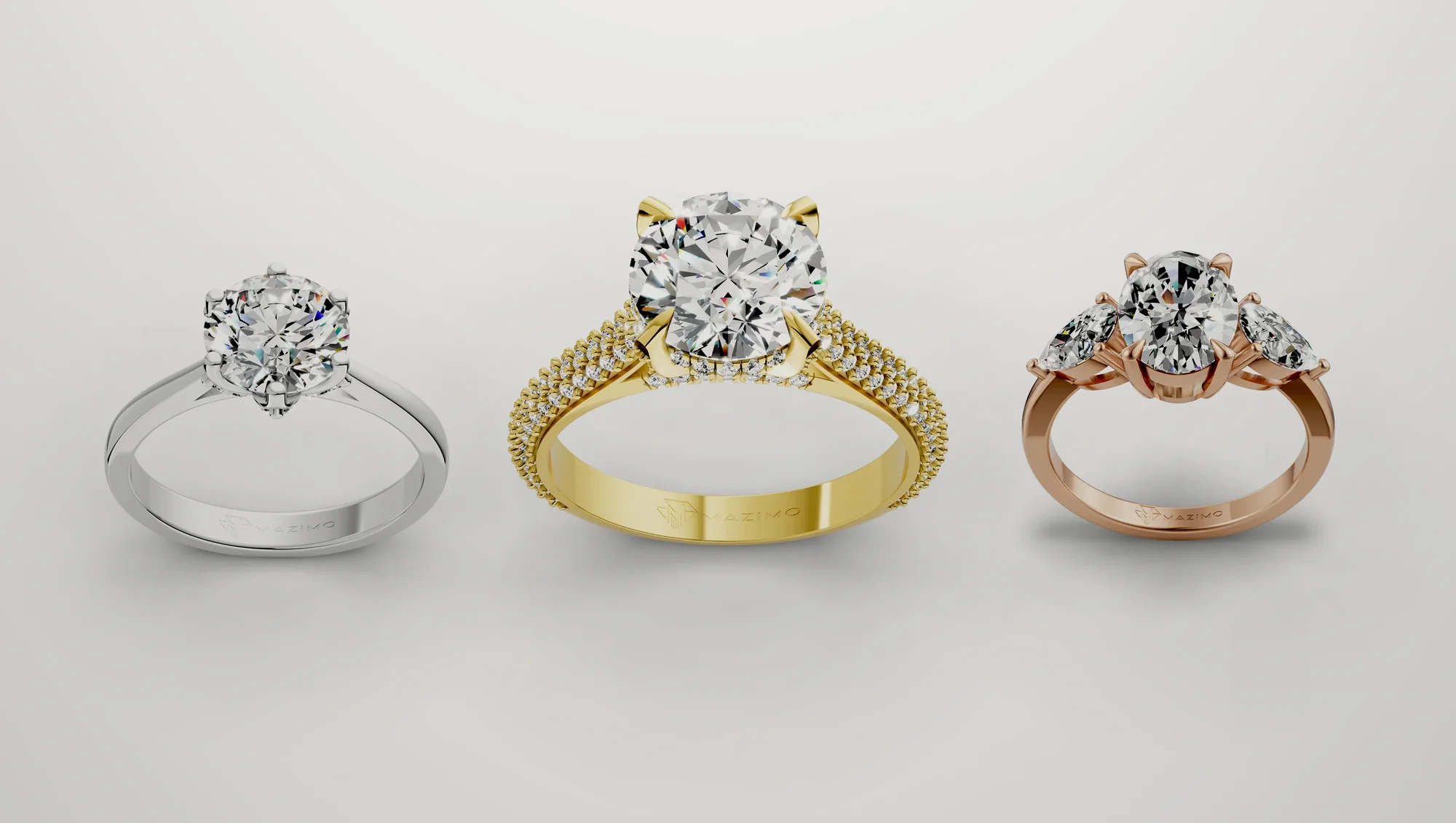
GIA gives a diamond cut grade to one shape only: the standard round brilliant, graded Excellent, Very Good, Good, Fair or Poor. Excellent at GIA, IDEAL at IGI and 0 at AGS are the top grades of three different scales, so none outranks another. An oval, pear or marquise has no overall GIA cut grade today, so read its polish and symmetry and judge the stone itself.
At a glance
- GIA's cut grade runs Excellent, Very Good, Good, Fair and Poor, and currently covers only standard round brilliants in D to Z colours.
- GIA's top grade is Excellent, IGI's top round grade prints as IDEAL on the sample report we read, and AGS marks its top as 0: three systems, not one ladder.
- For an oval, pear or marquise, read polish and symmetry, divide length by width, check an oval for a bow-tie and view the stone itself.
- Our six round rings have listed centres of about 8.00 × 8.03, 7.95 × 8.01, 8.05 × 8.07, 8.04 × 8.08, 6.47 × 6.49 and 6.40 × 6.40 mm, and our ring pages state no cut, polish or symmetry grade.
Facts checked on 17 October 2026.
Only one shape gets a GIA diamond cut grade
Three laboratories matter here: GIA (the Gemological Institute of America), IGI (the International Gemological Institute) and AGS (the American Gem Society). GIA's cut grade has five levels, and its 2026 report guide shows the grade only for standard round brilliants in D to Z colours. According to GIA's cut chart, the grade launched on GIA reports in January 2006. Fancy shapes such as oval, pear, marquise and cushion currently receive no overall cut grade, because GIA says their facet patterns vary too widely. They still get polish and symmetry grades.
IGI announced a cut grade for loose fancy shapes on 1 September 2022, and its process page now describes fancy-shape cut grading as optional and ranging from Excellent to Poor. Trade press reports a GIA statement that cut grades for oval, pear and marquise are planned for 2027. Jeweller Magazine (16 June 2026) and Diamond World (17 June 2026) both say details come in early 2027. We found no published criteria or scale as of October 2026, so treat that as a plan.
Of our 48 diamond rings, 42 have a non-round centre: 20 oval, 11 marquise, 3 pear, 3 emerald cut, 2 cushion, 2 radiant and one baguette. That is about 88% (42 ÷ 48 = 0.875), so for most of our rings there is no overall GIA cut grade to read. The cut line of our 4Cs guide gives the overview, and our diamond shapes guide compares the shapes themselves.
What the diamond cut grade measures
The grade judges a round brilliant's face-up appearance, design and craftsmanship. The overall grade takes the lowest rating among five components: brightness, fire, scintillation, weight ratio and durability. GIA's February 2026 article says polish and symmetry are graded separately, so a stone with Very Good polish can still earn an Excellent cut.
The definitions below come from GIA's cut chart, revised in December 2009, which predates GIA's 2026 wording on the five components. GIA defines brightness as white light reflecting inside and outside the stone, and fire as white light split into spectral colours. Scintillation is sparkle plus the pattern of light and dark areas. Weight ratio compares weight with diameter, and durability is the risk of damage from thin girdles or points. The girdle is the narrow band round the stone's edge, where a setting holds it.
The chart also gives the range of each single measurement within which Excellent is still possible. Table is the flat top facet as a share of the stone's width; crown and pavilion are the upper and lower parts, measured by their angles. Read them as limits, not a recipe: GIA says proportions are judged together, so a stone inside every limit can still grade lower.
| Measurement | Range where Excellent is still possible |
|---|---|
| Table size | 52 to 62% |
| Crown angle | 31.5 to 36.5 degrees |
| Pavilion angle | 40.6 to 41.8 degrees |
Excellent, Ideal and 0: three scales, not one
IGI's top round grade is Excellent-Ideal in its process text, and the sample report we read prints it as IDEAL. AGS's top is 0, called AGS Ideal. With GIA's Excellent, these are three systems with different top names: do not call one higher than another.
| Laboratory | Top grade | Scale and scope |
|---|---|---|
| GIA | Excellent | Five levels; standard rounds only |
| IGI | Excellent-Ideal, printed IDEAL on its 18 July 2025 sample report | Rounds; optional fancy-shape grade |
| AGS | 0, called AGS Ideal | 0 to 10; 10 is Poor |
IGI says lower polish or symmetry can pull a round's overall grade down. Its lab grown sample report, a round of 3.12 ct, prints cut IDEAL with polish and symmetry both EXCELLENT. We could not open IGI's list of cut levels below Excellent-Ideal, so read the scale printed on your own report.
AGS says the word Ideal belongs only to an AGS Ideal. AGS prints 0 for its top grade and 10 for Poor; its page lists verbal grades but does not say which numbers they match, so we map none.
AGS says it closed its laboratory in 2022 and that the AGS Ideal Report is available from GIA as a supplement. GIA describes it as a supplement that complements a GIA grading report and measures light performance. We read it as a supplement, not an overall GIA cut grade. GIA says no mounted diamonds are accepted, so you cannot order one for a stone already set in a ring.
Polish and symmetry: the lines every shape has
Polish is the smoothness of a diamond's surface, and symmetry is the exactness of its outline and the placement and alignment of its facets. GIA grades both from Excellent to Poor, whatever the shape, and says poor polish and symmetry reduce brightness and fire.
For ovals, GIA's oval guide suggests imagining a line down the centre and one across the middle. Each half should mirror the other, and the culet facet, the tiny facet at the very bottom, should sit dead centre. It names flat and bulging shoulders as outline faults.
For marquise, GIA's marquise guide says the left and right halves should appear balanced in outline and equal in length. Our marquise engagement ring guide adds that both points should sit on one straight line: that is our wording, not GIA's. Our IGI and GIA certificates guide reads a report line by line.
Judging a fancy shape with no cut grade
Without an overall grade, work through four checks after polish and symmetry. These are general checks, and none replaces seeing the stone.
- Divide length by width. GIA's oval guide calls 1.40 to 1.50 the most popular oval range. GIA says marquise submitted to its laboratory most often run 1.6 to 2.2, and its 2018 pear guide says many experts prefer about 1.50 to 1.75. By our own division of the listed sizes, our 20 oval rings run from about 1.38 to 1.55, our 11 marquise rings from about 1.75 to 2.15 and our 3 pear rings from about 1.58 to 1.68: not report figures. See our marquise versus oval and oval versus pear guides, and our oval engagement ring guide for ovals.
- Look for the bow-tie. A bow-tie is a darker band across the centre of an oval; GIA says it appears when your own head and shoulders block light. Some is always present and can add character when subtle: GIA advises viewing an oval in person or on video, because bow-tie visibility varies.
- Ask for millimetres, not only carats. Carat is weight, not size, so compare the length × width of the stones you are quoted. GIA's example is two stones that look the same size: 0.71 ct and 0.61 ct. The heavier one has a thicker girdle that hides weight, about 16% more (0.10 ÷ 0.61).
- Check the girdle and the points. GIA's oval guide says the proportion diagram on its report shows the range of girdle thickness, and that an extremely thin girdle may raise the risk of chipping. GIA's care page says pointed corners are often set with prongs, so ask how a setting covers the points of a pear or marquise.
A GIA research paper from Fall 2024 found that round brilliant grading methods cannot simply be transferred to fancy shapes. For a cushion, see our cushion cut guide.
How to read the measurements line on a round
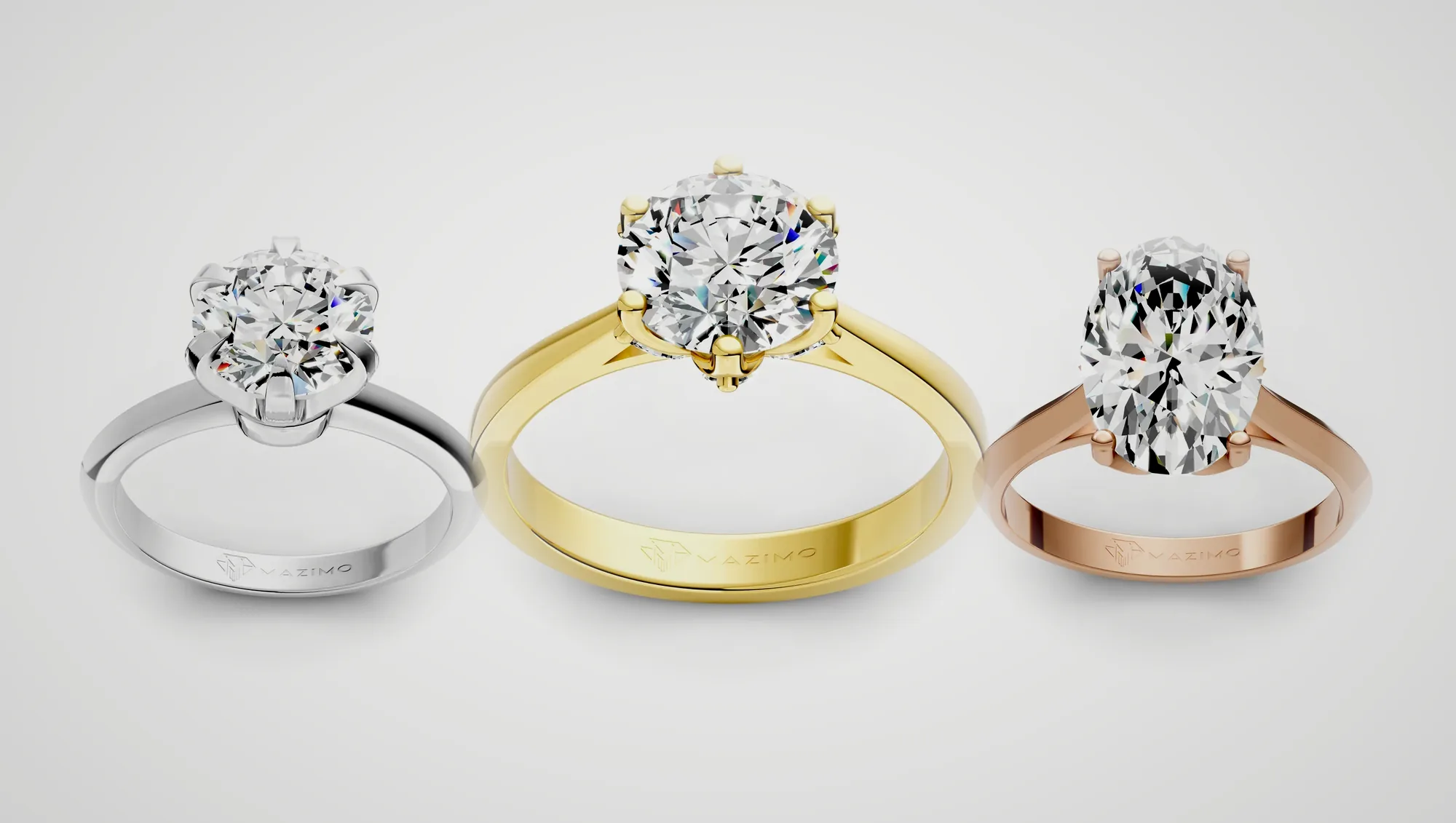
GIA's report guide lists a round's dimensions as minimum diameter, maximum diameter, then depth, and a fancy shape's as length, width, then depth. Our Round Six Claw Solitaire Ring has a listed centre of about 8.00 × 8.03 mm, and our Round Pavé Solitaire Ring about 7.95 × 8.01 mm. Those are spec sizes in the same two-diameter form, with no depth listed, not a grading report.
Our ring pages state no cut, polish or symmetry grade for either stone. Each is shown as 2 ct on its card; we give the millimetres because they are the better guide to size. Our diamond size chart in mm lists other weights. Whichever jeweller you use, ask to see the grading report for your stone before you decide, where one applies.
Lab grown stones and the cut minimum
Since 1 October 2025, GIA's lab grown assessment sets cut minimums. GIA's chart requires cut Excellent for a Premium round brilliant and Very Good for Standard, and polish and symmetry minimums apply to fancy shapes too. IGI keeps its own cut vocabulary. Our guide to lab grown diamond pros and cons and our comparison of lab grown and natural diamonds in the UAE cover the rest.
When a cut grade is not the right test
GIA's own example shows round stones with Excellent, Good and Poor cuts and J, L and I colour grades. The first two have lower colour grades than the third, yet GIA says they appear brighter. GIA grades colour and clarity separately, and an Excellent round is not automatically the right ring: shape, setting and hand matter.
For the other grades, read our guides to colour grade and fluorescence and eye-clean clarity.
Round and fancy rings to see
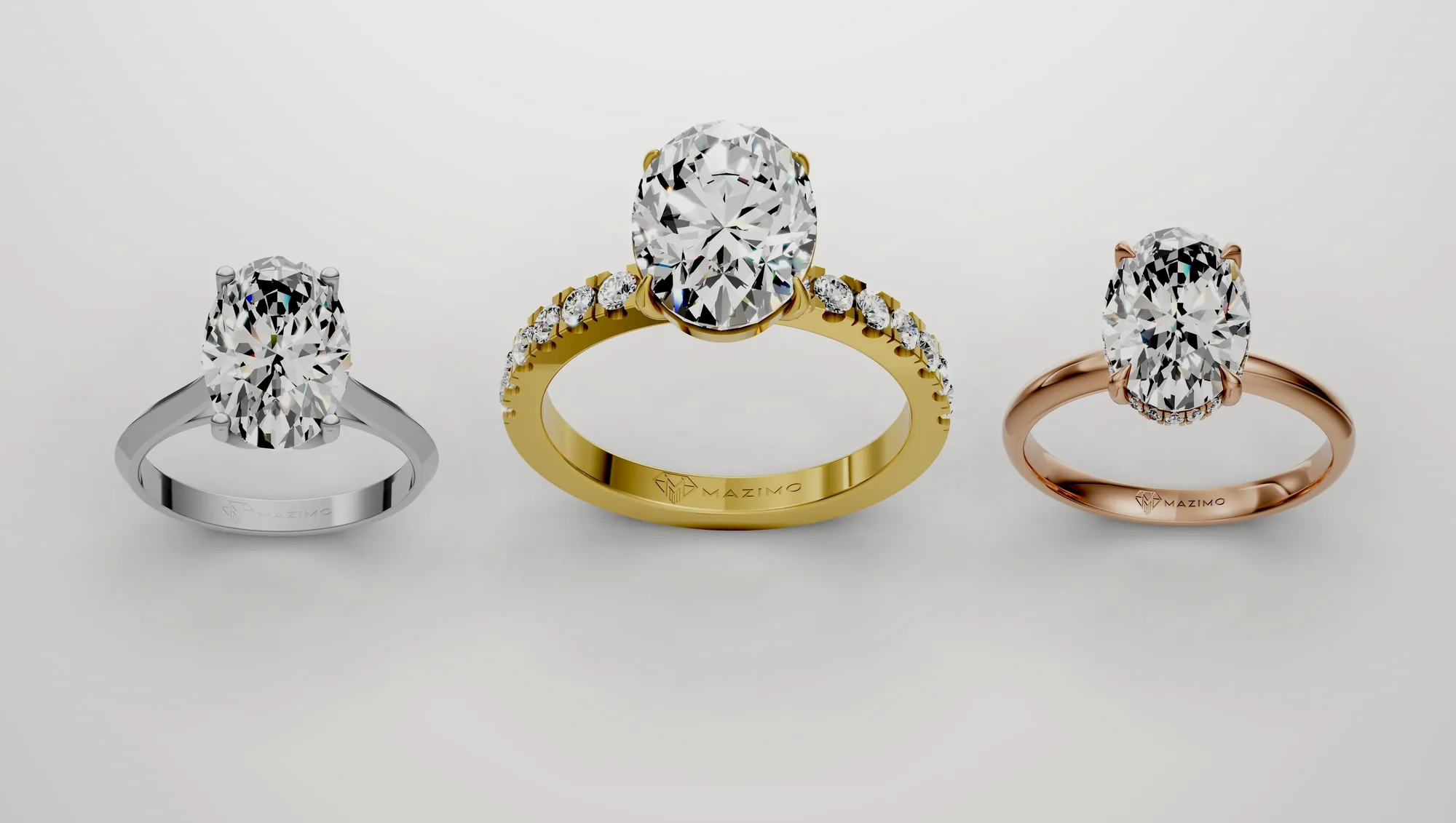
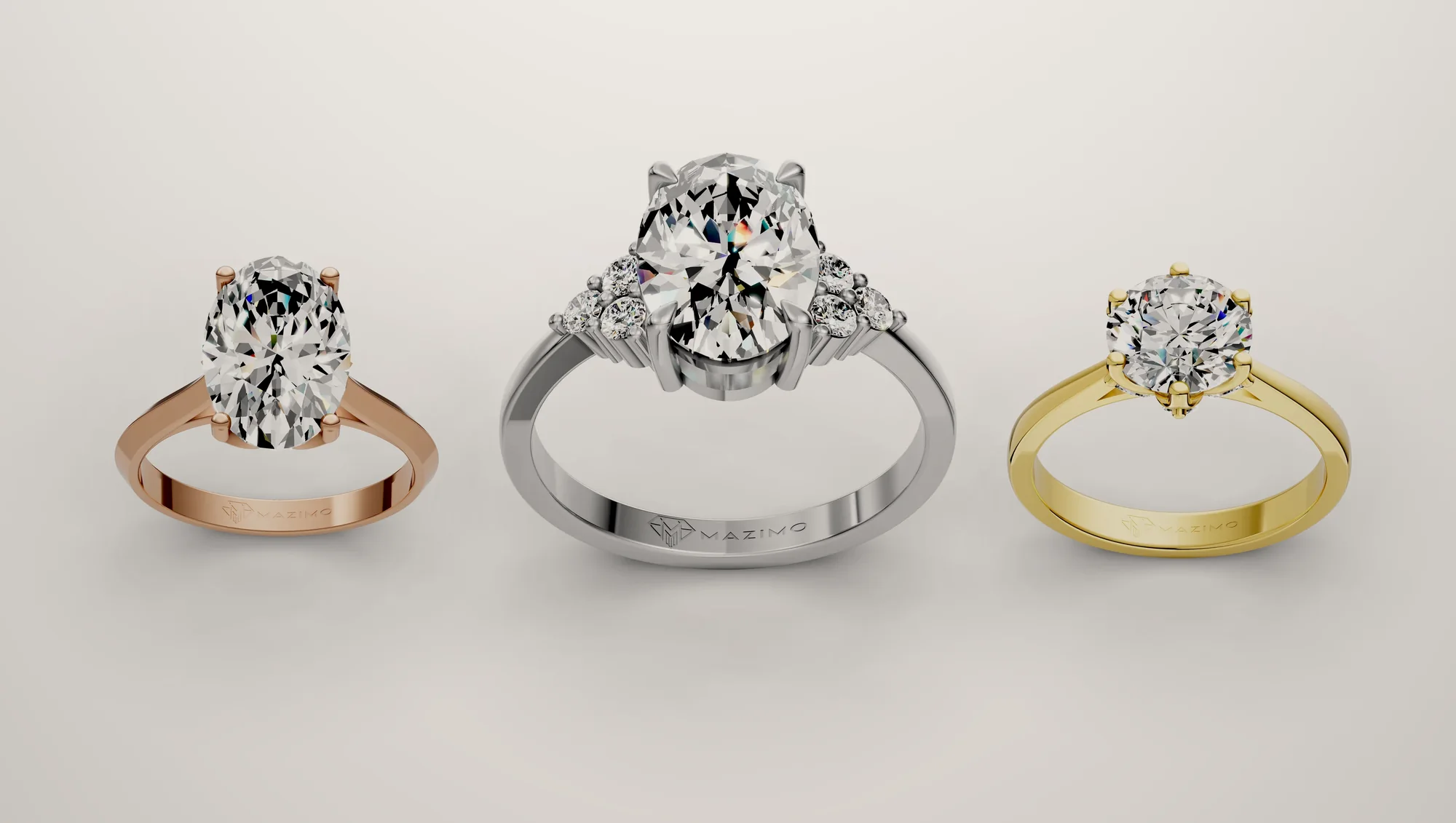
Every ring is made to order in UAE sizes 46 to 62. Each can carry a natural or a lab grown centre diamond, so tell us which you prefer when you ask for the price. A grading report accompanies the centre diamond where applicable. Ring pictures are renders, so book a viewing to see one.
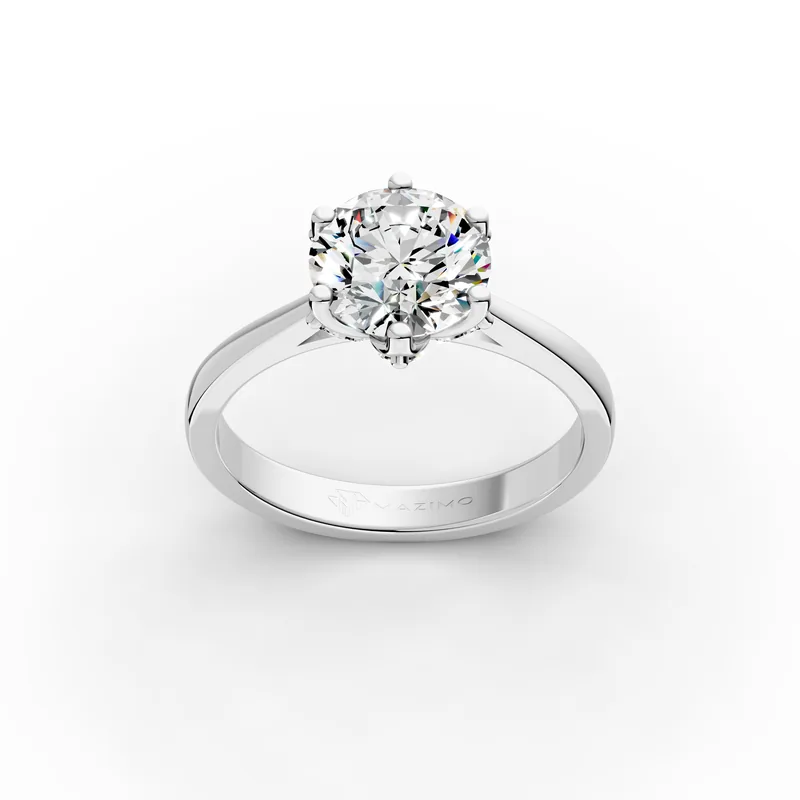 Round Six Claw Solitaire RingRound · 2 ct
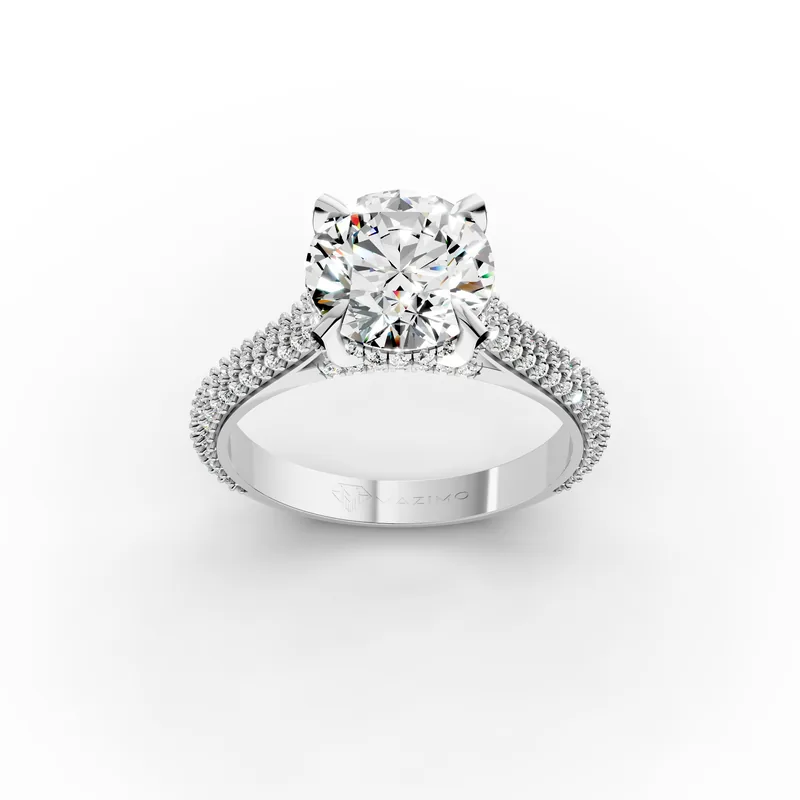 Round Pavé Solitaire RingRound · 2 ct
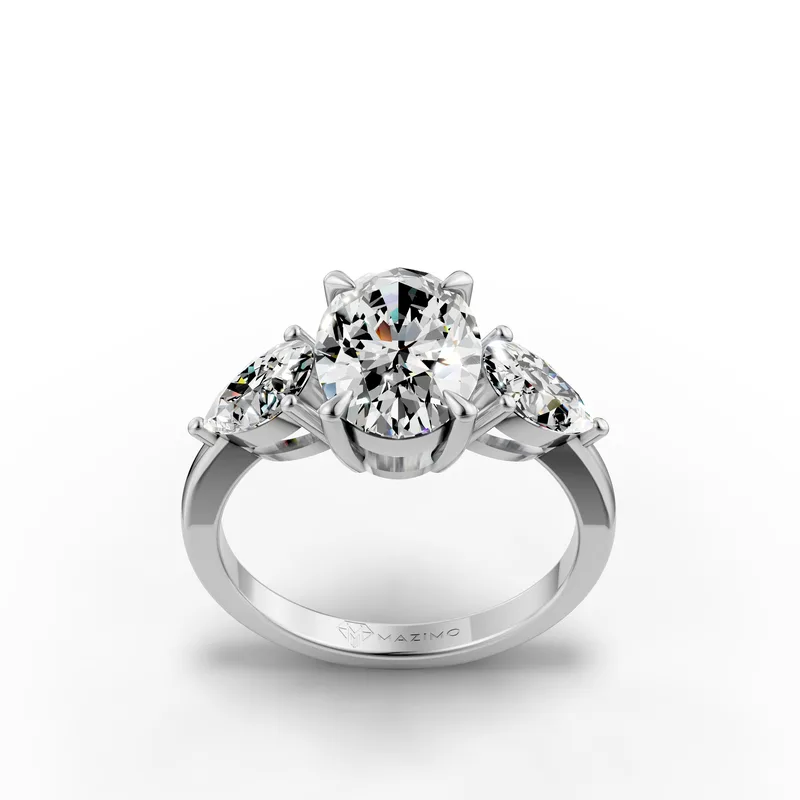 Oval and Pear Three Stone RingOval · 2 ct
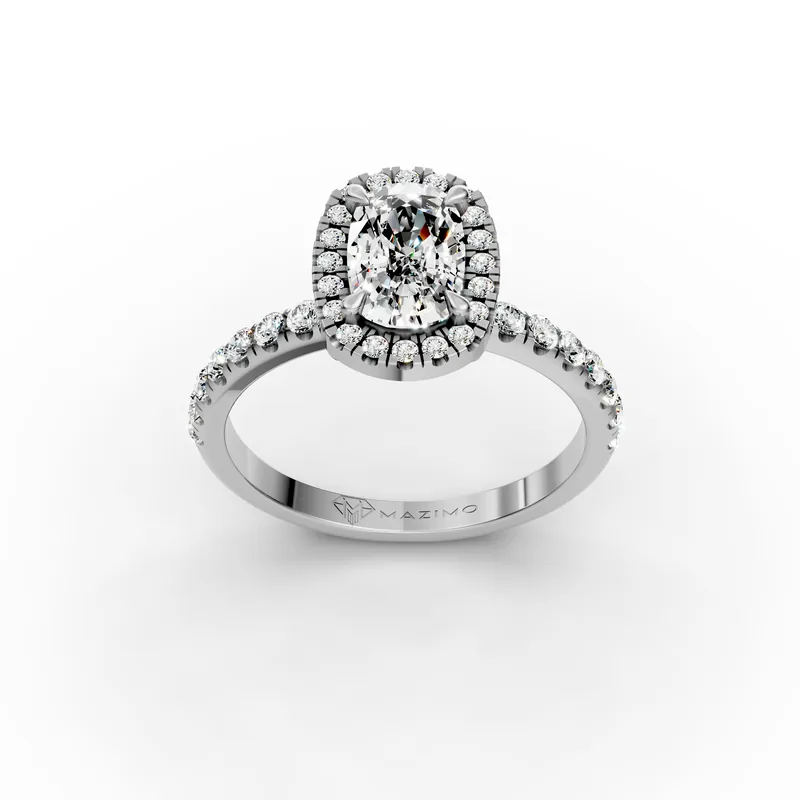 Cushion Halo Pavé RingCushion · 1.5 ct
Questions people ask
Which cut grade should you choose, Excellent or Very Good?
On a GIA round, the five levels are Excellent, Very Good, Good, Fair and Poor. GIA says to choose Excellent for maximum brilliance and fire, and advises aiming for Excellent or Very Good. Below Very Good, GIA says stones typically show noticeable reductions in brightness or symmetry. It does not quantify the gap between the top two. Fancy shapes have no overall GIA grade today, so judge the stone.
Is Excellent or Ideal cut better?
They are not interchangeable: each is its own laboratory's top grade, and we cannot say either outranks the other. We could not open IGI's full scale, so read the scale on your own report.
Do oval and pear diamonds have a cut grade?
GIA currently gives them none, though trade press reports a plan for oval, pear and marquise in 2027. IGI offers an optional fancy-shape cut grade, so check the report of your specific stone.
Does cut grade matter more than carat?
GIA says an Excellent or Very Good cut is often wiser than a larger stone with a lower cut grade. AGS says a well cut smaller stone can look larger than a slightly larger one of lesser cut. Neither is a rule: it holds often, not always.
How many facets does a round brilliant diamond have?
CIBJO (the World Jewellery Confederation) lists 57, or 58 with an optional culet. The 57 are table 1, bezel 8, star 8, upper girdle 16, pavilion main 8 and lower girdle 16.
At Mazimo. Try a 0.75 ct round pavé, a 2.00 ct round solitaire or a 1.50 ct oval solitaire in our ring designer, then message us on WhatsApp for the price, or visit Al Manal Center, Deira, minutes from the Gold Souk. The gold is 18K, hallmarked in Dubai, and delivery across the UAE is insured at no charge.