DIAMONDS
17 October 2026
Eye Clean Diamond: Is VS1, VS2 or SI1 Enough?
What a clarity grade measures at 10x against what you see across a table, what GIA says VS1, VS2 and SI1 show to the eye, and what to ask for on a quote.
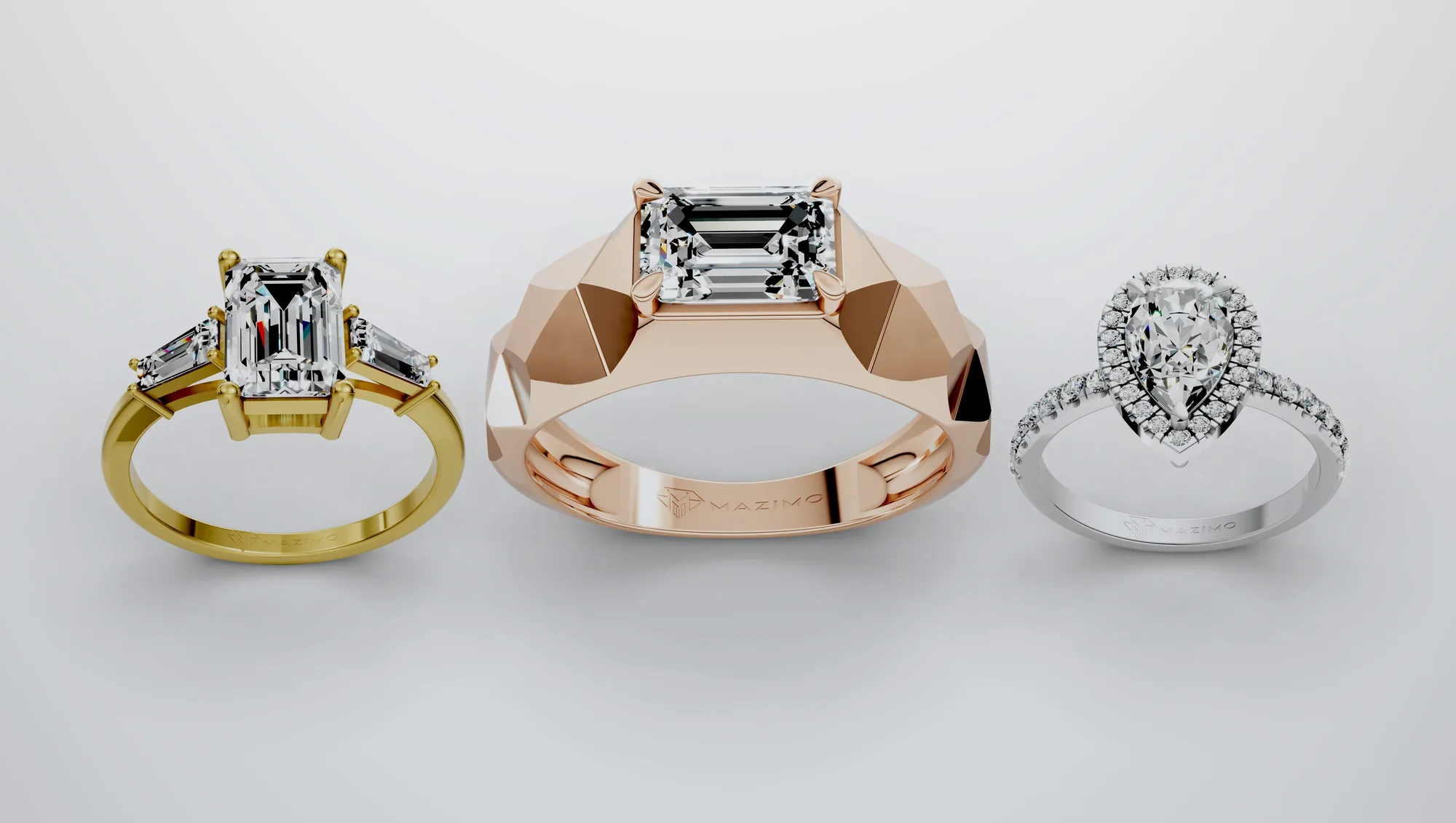
An eye clean diamond is one whose inclusions you cannot see with the naked eye: a trade phrase, not a grade. GIA's VVS and VS page says that in almost all cases VS stones show no inclusions to the eye. Its buying guide says most diamonds down to even SI1 lack easily visible ones. Our reading: VS1 and VS2 almost always look clean, and SI1 often shows nothing easy to see, but none is guaranteed. Position and shape change what you see.
At a glance
- GIA says VS stones almost always show no inclusions to the eye, and most diamonds down to even SI1 lack easily visible ones.
- A clarity grade records what a grader finds at 10x, and GIA does not use the term eye clean.
- Position and cut style change how easily you see an inclusion, and our advice, not GIA's, is VS1 or better in an emerald cut.
- Our ring pages list no clarity grade: ask any seller, including us, what your quote says about clarity and the report.
What a clarity grade measures
A clarity grade records what a trained grader finds at 10x magnification, not what the naked eye sees. GIA's clarity page says the grade rests on the number, size, relief, nature and location of characteristics, and that many cannot be seen with the naked eye. The scale has 11 grades in six groups, from FL to I3. Most diamonds you see in jewellery stores fall between VS and SI.
IGI also grades clarity at 10x and, on its clarity page, uses the same group names.
The table follows GIA's VVS and VS page, dated 8 August 2023.
| Group | Meaning at 10x | What GIA says about the eye |
|---|---|---|
| FL, IF | No inclusions; FL has no blemishes, IF only insignificant ones | Not applicable: no inclusions at 10x |
| VVS1, VVS2 | Minute inclusions, extremely (VVS1) to very (VVS2) difficult to see | Eye-visible inclusions would rule out these grades |
| VS1, VS2 | Minor inclusions, difficult (VS1) to somewhat easy (VS2) to see | Almost always not visible; very rarely a large VS stone might show one |
| SI1, SI2 | Noticeable inclusions, easy (SI1) to very easy (SI2) to see | Usually not visible |
| I1, I2, I3 | Obvious inclusions | Often seen with the unaided eye |
What does an eye clean diamond mean? GIA's definition and what it leaves out
Eye clean is a trade phrase, not a grade. GIA defines it as an industry term for a diamond whose inclusions cannot be seen with the naked eye, then states that GIA does not use the term. A post on IGI's website says IGI and other laboratories do not make an eye clean judgement.
GIA's buying guide of 7 July 2020 says most diamonds down to VS2 or even SI1 lack easily visible inclusions, depending on the vision of the person looking. Its VVS and VS page is firmer for VS stones.
GIA does not say that every VS2 or SI1 stone is eye clean, and we do not say it either. CIBJO's trade standard, valid as of October 2024, says I1 inclusions are also visible face up. In the pages we read, neither GIA nor CIBJO gives a viewing distance or lighting standard for the phrase.
The 2022 IGI post quotes a definition from a PriceScope community survey: face up, in daylight or fluorescent light, 6 to 12 inches away, 20/20 vision. That is a survey consensus, not an IGI or GIA standard, so ask any seller to define the phrase. We checked the GIA, IGI and CIBJO pages cited here on 17 October 2026.
VS1 vs VS2 vs SI1: what GIA says each will show
The middle column is GIA's, from its VVS and VS page and buying guide. The last column is our reading. For SI1, GIA's "easily visible" is weaker than "cannot be seen", and IGI says SI inclusions may sometimes be visible to the naked eye.
| Grade at 10x | The naked eye, per GIA | Our reading |
|---|---|---|
| VS1: difficult to see | In almost all cases VS stones show nothing; very rarely a large one might | Almost always looks clean |
| VS2: somewhat easy to see | The same as VS1: GIA does not separate them | Almost always looks clean |
| SI1: easy to see | Usually not eye visible; most diamonds down to even SI1 lack easily visible inclusions | Often nothing easy to see, but check it |
Does an eye clean diamond stay clean once it is set? Position and type
Where an inclusion sits changes how easily you see it, so two stones with one grade can look different. GIA's seven things page says the closer an inclusion is to the centre of the table, the greater its effect on the grade. The buying guide adds that inclusions near the edges might be covered by the setting.
Smaller, lighter coloured inclusions are harder to see, says the buying guide, and IGI says opaque or dark ones stand out more. On GIA's VVS and VS page, a VVS2 feather will likely be hidden by a prong, while a VS1 feather under the table cannot be hidden by the setting.
The same page says a GIA Diamond Grading Report provides a plotted diagram, and that no two diamonds will have the same plotted diagram unless both are Flawless. A GIA lab grown assessment is not a grading report, and the pages we read do not say whether it carries a plot.
Our settings guide compares claws, halos and the other settings, and our bezel vs prong guide shows what a bezel covers at the edge.
What clarity for an eye clean diamond in an emerald cut?
Step cuts such as the emerald show inclusions more readily than brilliant cuts. GIA's buying guide says this is because the facets are larger and fewer, and suggests a brilliant cut if you want to go lower in clarity. It adds that inclusions near the tips of brilliant cuts such as the pear are less visible. The VVS and VS page lists the marquise among the cuts that suit higher clarity.
GIA gives the reason but no minimum grade for step cuts. Our advice, from our diamond 4Cs guide, is to ask for VS1 or better in an emerald cut. It is our rule of thumb, not a tested threshold, and we found no source that gives one. Our diamond shapes guide compares the shapes.
| Ring | Centre shape | Centre, about (L × W) |
|---|---|---|
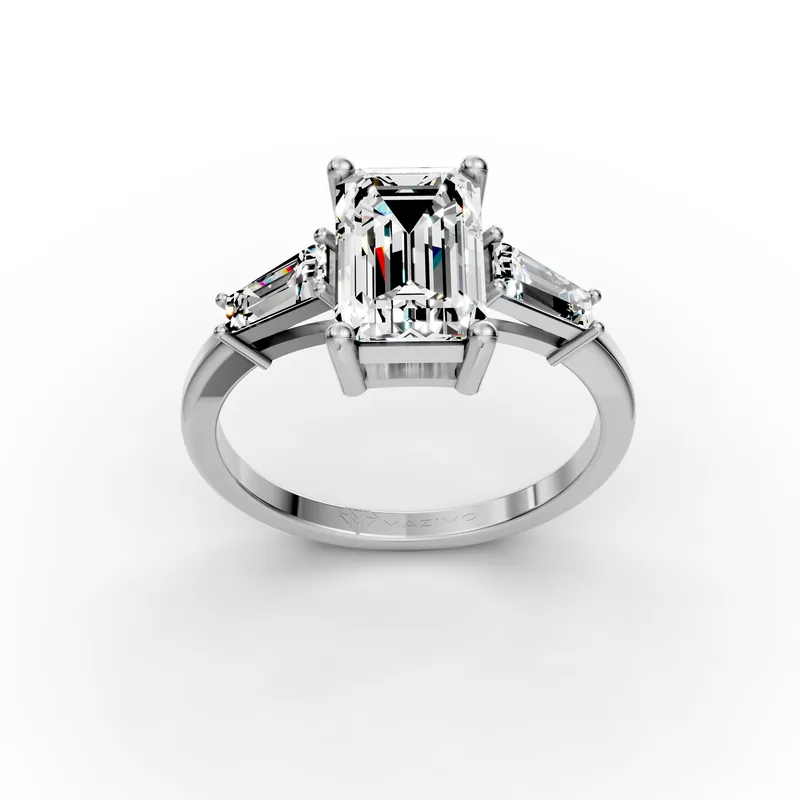
| Emerald and Baguette Three Stone Ring | Emerald cut | 8.8 × 5.9 mm |
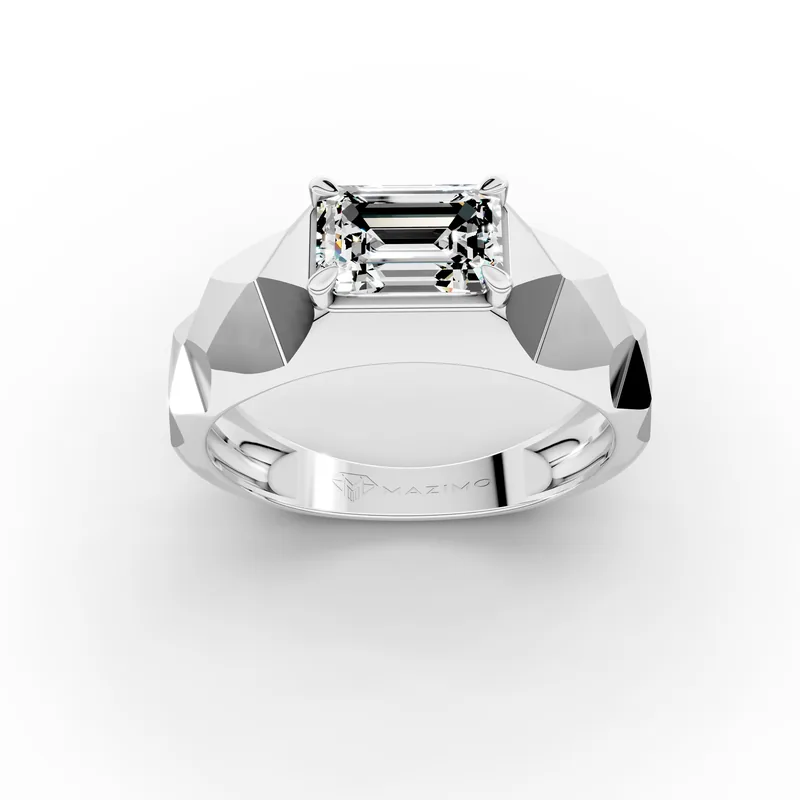
| Emerald Faceted Ring | Emerald cut | 7.8 × 5.5 mm |
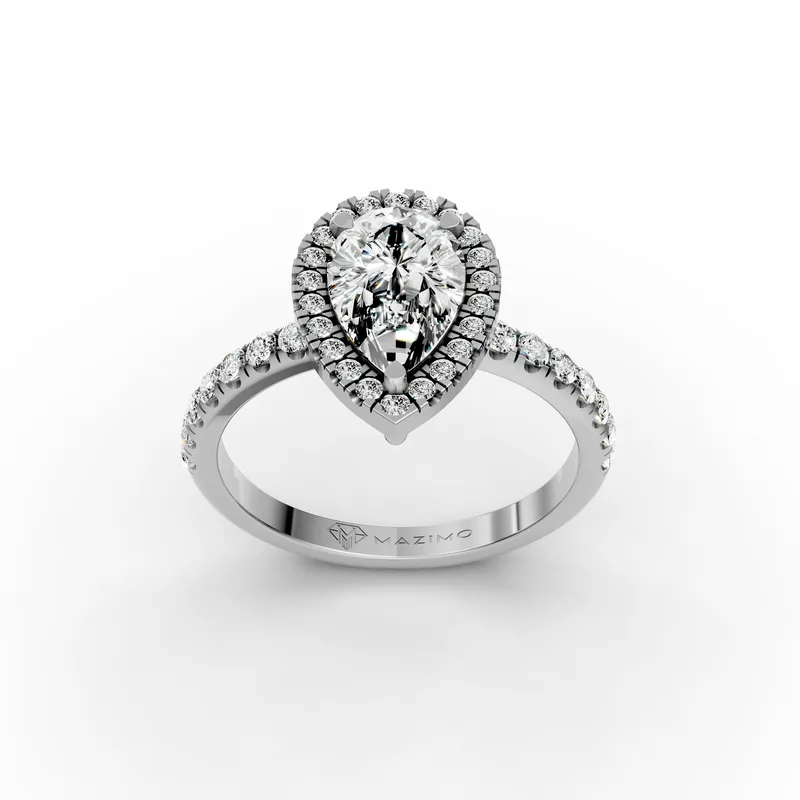
| Pear Halo Pavé Ring | Pear | 9 × 5.7 mm |
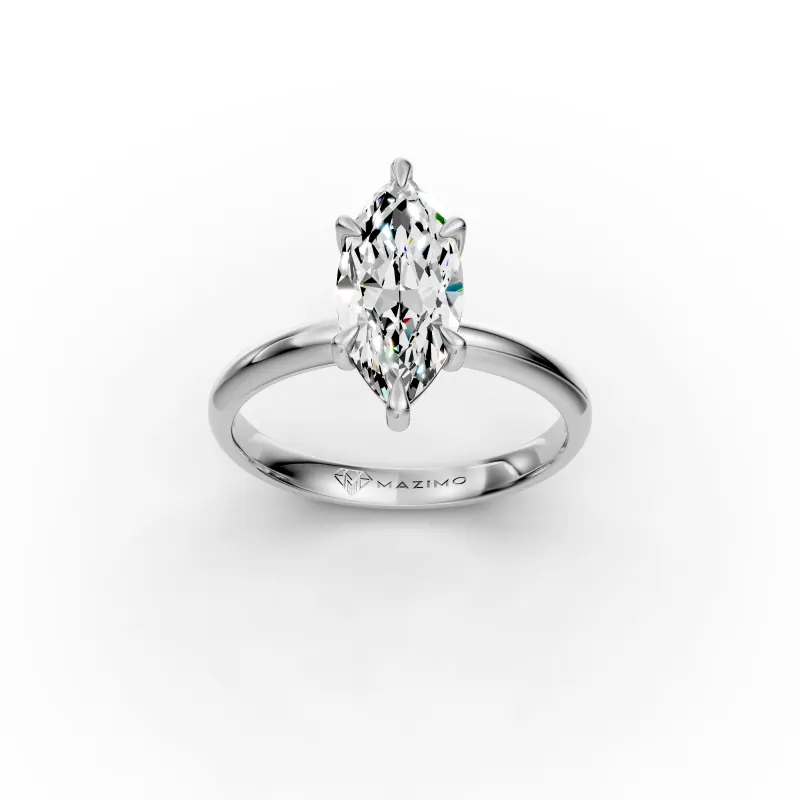
| Marquise Solitaire Ring | Marquise | 11.7 × 6 mm |
Our ring pages print these sizes, and we state no clarity for any ring. GIA gives no size at which a VS stone starts to show an inclusion, so we cannot say our emerald cut centres are large enough to matter. Our new signet and bezel rings guide also notes that clarity is easier to see in a step cut.
Lab grown and clarity
IGI says it evaluates lab grown diamonds on the same core principles as natural ones, including clarity. GIA's criteria chart says that from 1 October 2025 it gives loose colourless to near-colourless lab grown stones of 0.15 ct and up a Premium or Standard assessment. It lists VVS clarity for Premium and VS clarity for Standard.
A stone with any criterion outside those ratings gets no assessment, and the chart does not say how FL and IF stones are treated. We found no primary source showing that lab grown stones are more often eye clean, so we make no such claim. See our guide to IGI and GIA reports in Dubai, the lab grown diamond pros and cons and our lab grown and natural comparison.
What to ask when a quote says eye clean
Eye clean on a quote means little without the grade, the laboratory and the stone. Ask five questions.
- Which clarity grade, and from which laboratory?
- If there is a plot, can I see it?
- Is the stone a step cut? If so, take more care.
- Does the report cover the centre stone only? Our grading-report wording refers to the centre diamond only.
- What does the seller's wording mean? Ours is that a grading report accompanies the centre diamond where applicable. Our ring pages list no clarity grade, so ask any seller, including us, what your quote says about clarity and the report.
GIA's guide to spotting a real diamond says most consumers have difficulty using a loupe, and its ring guide suggests it for checking prongs for gaps and damage. To see our rings and try them on, you can book a private viewing at Al Manal Center: about 45 minutes, no obligation.
When paying for a higher grade is not the right choice
Stepping from VS2 to VS1, or from VVS to VS, is a difference found at 10x. GIA's VVS and VS page says in almost all cases the clarity features in both VVS and VS diamonds cannot be seen with the naked eye. SI2, the I grades and step cuts are different.
The same page adds that the money saved on a VS stone might buy a larger diamond or one with better colour or cut. Our advice: settle cut and size first, then pick the lowest grade that still looks clean to you when you can see the stone and its report. Our diamond 4Cs guide covers where to spend and where to save, and our guide to choosing an engagement ring in Dubai puts clarity in the wider decision.
Clarity and step cuts at Mazimo, Dubai
Our diamond rings are made to order in 18K gold, in UAE sizes 46 to 62. When you ask for the price on WhatsApp, tell us whether you want a natural or a lab grown centre diamond. In our designer, a 2.50 ct three stone emerald draws at about 9.5 × 6.8 mm. A 1.50 ct emerald solitaire draws at about 8.0 × 5.7 mm (7.0 × 5.0 mm at 1 ct, each times 1.1447, the cube root of 1.5). The rings below are shown in white gold.
Questions people ask
Is SI1 clarity eye clean?
Not reliably. GIA says most diamonds down to even SI1 lack easily visible inclusions, which is weaker than saying they cannot be seen, and SI1 inclusions are easy to see at 10x.
Is VS2 clarity good enough for an engagement ring?
For looks, usually. GIA says that in almost all cases VS stones show no inclusions to the eye. In an emerald cut our advice, not GIA's, is to ask for VS1 or better.
What is the difference between VS1 and VS2?
The difference between VS1 and VS2 is found at 10x, and in almost all cases not by eye. GIA calls VS1 inclusions difficult to see and VS2 somewhat easy at 10x.
What clarity should I choose for an emerald cut diamond?
Our advice is VS1 or better in an emerald cut; GIA gives the reason but no minimum grade. Step cuts have larger, fewer facets, so inclusions are much more noticeable.
Do inclusions show once a diamond is set in a ring?
Some inclusions are hidden once the diamond is set, and others are not. GIA says a VVS2 feather will likely be hidden by a prong, but a feather under the table cannot be hidden.
At Mazimo. Design a ring in our ring designer, message us on WhatsApp for the price, and ask any seller, including us, what your quote says about clarity and the report. Or visit Al Manal Center, Deira, minutes from the Gold Souk. Every ring is 18K gold, hallmarked in Dubai and delivered insured across the UAE at no charge. For the other two grades, read our cut grade guide and our colour grade and fluorescence guide.