DIAMONDS
24 October 2026
Do Lab Grown Diamonds Pass a Diamond Tester? What It Proves
Yes: a lab grown diamond reads as diamond on a heat tester, just as a mined one does. Telling it from natural takes laboratory instruments and a report you can check.
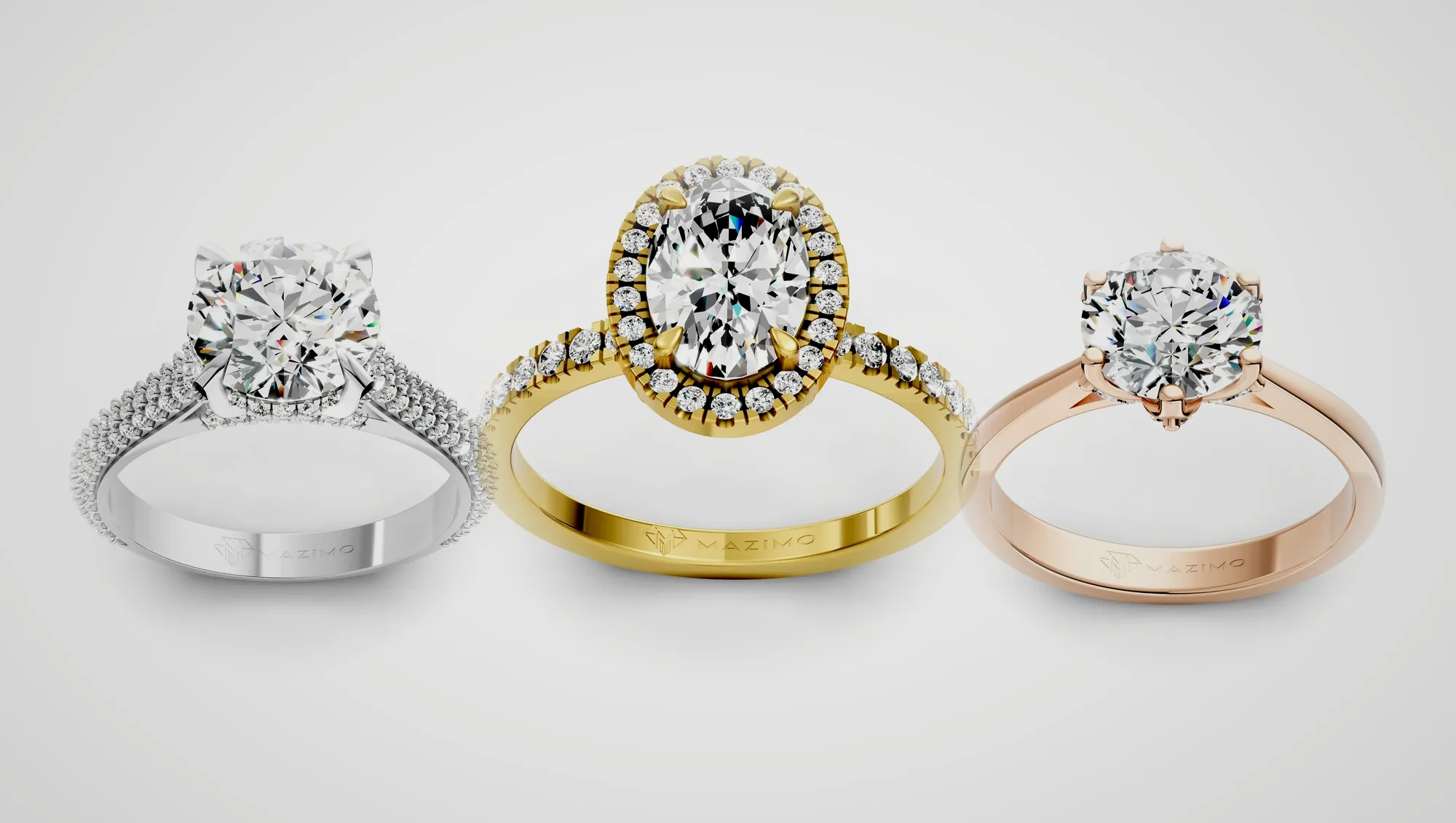
Do lab grown diamonds pass a diamond tester? Yes. A lab grown diamond is diamond, so a heat probe reads it just as it reads a mined stone, and IGI says thermal testers make no distinction between the two. A pass rules out cubic zirconia, but it does not show a stone is natural. Telling lab grown from natural takes laboratory instruments and a report you can check.
At a glance
- A lab grown diamond reads as diamond on a standard thermal tester, and IGI says such testers make no distinction between lab grown and natural diamonds.
- Thermal testers can also read moissanite as diamond, and the electrical test added to catch it can misread some lab grown diamonds as moissanite.
- GIA says traditional gemmological observation and instruments cannot tell lab grown from natural, so laboratories use screening, imaging and spectroscopy.
- A laboratory report and girdle inscription are the paper trail, but GIA has recorded fraudulent inscriptions, so check the report number online and the stone's measurements.
- Our ring pages state no diamond origin or grade, and we can set either a lab grown or a natural diamond, so tell us which you prefer.
Sources checked 20 October 2026; the IGI pages and GIA's lab grown service page were read on 24 October 2026. IGI's tester page is dated 24 May 2022. We tested no device and have not checked UAE federal rules.
Do lab grown diamonds pass a diamond tester? Yes, as diamond
Both kinds read as diamond, because both are the same material. IGI's 2022 article says they share thermal conductivity, so a thermal tester cannot separate them. GIA says lab grown and natural diamonds are essentially identical chemically and optically.
"Do lab grown diamonds test real" has two honest answers. They test as diamond, and they are diamond: the FTC's definition, as in force on 1 October 2026, describes a mineral of essentially pure carbon crystallised in the isometric system and does not say natural. That is US guidance, not UAE law. They do not test as natural, because the handheld heat and electrical testers described here do not measure origin. Our lab grown diamond pros and cons guide covers the real or fake debate.
How a diamond tester works: heat and electricity
Handheld testers measure how fast heat leaves a probe, whether electricity passes through the stone, or both. These descriptions come from patents and a gemmology school, not independent tests.
- Thermal probe or pen. A heated probe touches the stone and the tester times how fast the probe cools. A patent granted in 2001 calls this widely used to separate cubic zirconia from diamond.
- Electrical tester. A high voltage goes through a probe, and a clip on the metal setting completes the circuit. The same patent calls natural diamond virtually non-conductive and says moissanite generally needs about 300 to 500 volts to conduct consistently, while ordinary meters at about 30 volts often read it as an open circuit.
- Multi-tester. The Gem Academy says it combines both tests. A 2026 patent from a tester maker describes one probe tip that checks for metal, then runs a thermal test, with an ultraviolet optical test used only when needed.
Diamond tester and moissanite: why a heat probe is fooled
A thermal tester often reads moissanite as diamond, because the two handle heat in a similar way. GIA's 1997 study found that the thermal probes then on the market reacted to the new synthetic moissanite as if it were diamond, and separated the two by the doubled look of its facet edges. The FTC's guide for sellers (July 2019) gives the same warning, and IGI says an electronic tester separates them more reliably.
The electrical test has its own catch. IGI says electrical testers can mistake certain lab grown diamonds for moissanite, and names the cause as the HPHT (high pressure, high temperature) growth process: it uses a metal catalyst, and remnants of it can make a stone conduct. IGI adds that natural or lab grown fancy blue diamonds may also conduct because they contain boron, an impurity that changes how a crystal conducts.
The Gem Academy says many HPHT stones contain boron, and that more growers now make CVD (chemical vapour deposition) stones with minute boron, so the sources give more than one cause. GIA's 2017 review found that colourless HPHT stones often contain small amounts of boron and are type IIa or, more commonly, type IIb (type II means no detectable nitrogen; IIb also carries boron). The 2026 patent says type IIb diamonds conduct electricity. Our CVD vs HPHT guide explains the growth methods.
So a tester can be wrong both ways: a thermal test can pass moissanite as diamond, and an electrical test can read a diamond as moissanite. None of the sources we read gives a rate for either error. Our moissanite vs lab grown diamond guide compares the stones.
Tester results by stone: what each test shows
Heat and electricity help separate diamond from imitations such as cubic zirconia, but neither is dependable against moissanite, and neither shows origin. The table gathers the sources above and GIA's page on imitations, and says where they are silent.
| Test | Diamond, natural or lab grown | Moissanite | Cubic zirconia | What a result proves |
|---|---|---|---|---|
| Thermal pen or probe | Reads as diamond | Often reads as diamond | Reads as not diamond | Rules out cubic zirconia, not moissanite; says nothing about origin |
| Electrical mode or multi-tester | Reads as diamond, but some HPHT and CVD stones, and stones with boron, can conduct and read as moissanite | Usually reads as moissanite; some newer colourless material may read as diamond | Fails the heat step (our reading) | Better at diamond against moissanite, still blind to origin |
| Looking at the stone (loupe or eye) | GIA says a loupe will not reveal a synthetic diamond | GIA says viewers will see a double image of the back facets | Not covered in our sources | May show moissanite's double image, cannot show origin |
| Fog, sparkle or newspaper test | Same material, so natural and lab grown react alike (our reading) | Sparkles too: GIA says almost any faceted gem, moissanite included, can look as if it sparkles | Also shows fire, with less brilliance than diamond (GIA's imitations page) | Nothing conclusive: GIA says there is no reliable at-home test |
| Trade screening device, Pass or Refer | Pass means natural; Refer means natural or lab grown | Depends on the device: GIA says some may pass simulants | Same as moissanite | Natural or not yet known; a Refer needs more testing |
| Laboratory instruments | Examine the crystal's growth pattern and impurities; some recent CVD stones need more specialised imaging | Shown to be not diamond | Shown to be not diamond | The route to an origin opinion, with a report as the record |
Can a diamond tester tell lab grown from natural? Not a handheld one
A handheld heat or electrical tester cannot. Trade screening devices can pass a stone as natural or refer it for more testing, and laboratory instruments can identify origin, because both look at the crystal's impurities and structure instead of how it conducts. GIA's 2024 update describes the first screen: nearly all natural diamonds of D to N colour are type Ia, which holds aggregated nitrogen, while all colourless lab grown stones are type II, and only about 1 percent of natural diamonds are type II.
The same update lists the limits. Devices differ in colour range, size and whether they refer simulants. Stones with CVD growth over a natural base can pass some standard screening, though deep ultraviolet imaging and photoluminescence identified them in a study GIA cites. GIA says no cost-effective or rapid tool can identify all lab grown diamonds. CIBJO's guidelines say verification instruments should be assessed by a third party, such as the Assure Testing Program.
In a laboratory, DiamondView imaging shows growth structure under deep ultraviolet light of below 225 nanometres. GIA's 2016 article says concentric patterns point to natural stones, cross-shaped ones to HPHT and striations to CVD. GIA's 2024 update adds that some recent CVD stones lack those traditional patterns and can need more specialised imaging. GIA's own page says its iD100 gives Pass or Refer in under two seconds, including on mounted stones; we found no independent figures.
IGI wrote in 2022 that ultraviolet testers for jewellery professionals may help as a first screen for stones bought over the counter, but a grading report should accompany a stone whenever it changes hands.
How to test a lab grown diamond: the report and the inscription
The dependable test is a laboratory report: read its origin wording, then check the number on the laboratory's own website. GIA says a report can be verified through GIA Report Check, and a jeweller can submit an unreported stone to GIA.
| Who | What to look for | Where we read it |
|---|---|---|
| GIA | Since 1 October 2025, GIA's assessment of loose, colourless to near-colourless lab grown diamonds of 0.15 carat or more classes each stone Premium or Standard, not with GIA's natural diamond wording, and stones below the Standard minimums get no assessment. The girdle is laser inscribed with the words laboratory grown and the assessment number. Our GIA report guide has the criteria. | GIA lab grown diamond service page and press release, 26 August 2025 |
| IGI | IGI says every lab grown diamond it reports has the prefix LG laser inscribed on the girdle ahead of the report number and noted in the comments. IGI's lab grown report page says the comments note the growth process and treatments on request, so ask for them. | IGI lab grown report page and Hearts & Arrows report page; our IGI report guide |
| CIBJO (trade guidance, not law) | The report heading should say the stone is a laboratory grown diamond, the process should be named in full as HPHT or CVD, and any treatment after growth should be stated, or that there was none. CIBJO also suggests LG before the number. | CIBJO guidelines 2024, clauses 6.3 to 6.5 |
GIA's June 2025 announcement says existing reports remain valid, so the date on a GIA report matters. Our GIA report guide and IGI and GIA certificates in Dubai read both reports line by line.
When an inscription or a report is not proof
An inscription alone proves nothing, because GIA has found stones carrying copied numbers. In a 2017 lab note, a round brilliant bore the number of a real report for a different, natural stone. It was HPHT, type IIb with boron, and the font did not match GIA's. A 2020 lab note describes a moissanite carrying a natural diamond's number, a case our moissanite vs lab grown diamond guide also covers.
The 2020 case shows that a real report number on a stone does not prove the stone is the one reported: the measurements differed. Comparing the stone's measurements and properties with the report is our advice, not GIA's.
The section on matching the paper to the stone in our certificates guide has the two checks: read the girdle inscription before the stone is set, then check the number on the laboratory's own site against the stone's weight and measurements.
What to ask in Dubai when a seller says natural
Ask for the origin in writing and a report you can check. "It tested as diamond" is not an answer.
- Does the invoice say natural or lab grown beside the stone? CIBJO's guidelines say words such as natural, real or genuine shall not be attached to a laboratory grown diamond. The US FTC guide wants a qualifier immediately before the word diamond, equally conspicuous.
- Which report, and does it name the growth process and any treatment? Check its number on the laboratory's site.
- Does the paperwork cover the small stones too? GIA says small melee stones (very small diamonds) are hard to handle, often lack markings, and can take two to three times longer to analyse than a half carat diamond.
- If the answer is "we tested it", with what? A thermal or electrical tester cannot show origin.
In Dubai, DMCC says members of its lab grown diamonds ecosystem follow a code of conduct that keeps lab grown and natural diamonds apart and requires full disclosure of lab grown products. We have not read the code's text, so we cannot say what binds a given shop. Our guide to where to buy an engagement ring in Dubai lists what an invoice should show, and selling a diamond ring in Dubai covers the other side of the counter.
One stone or many: what a tester reading covers
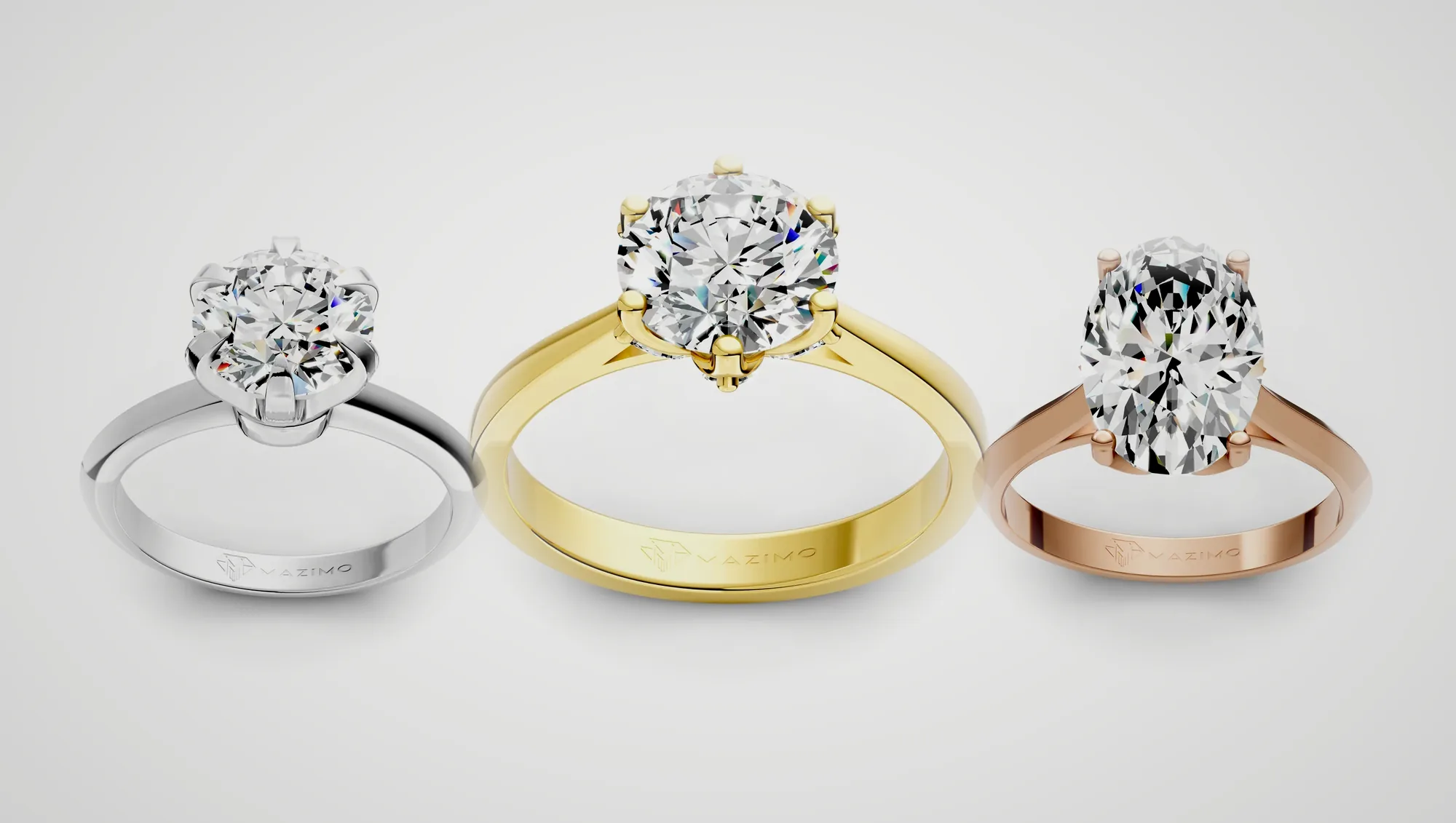
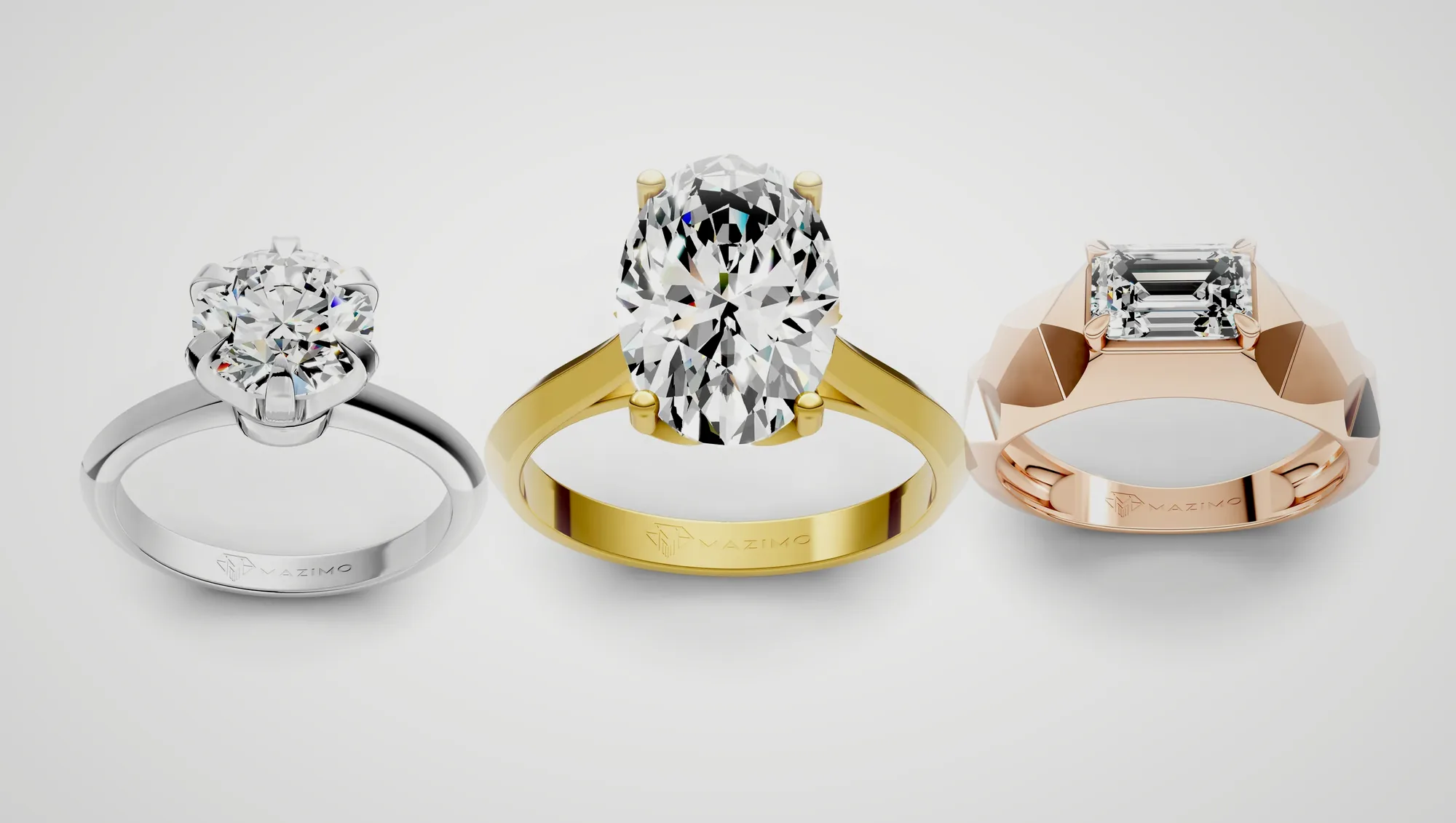
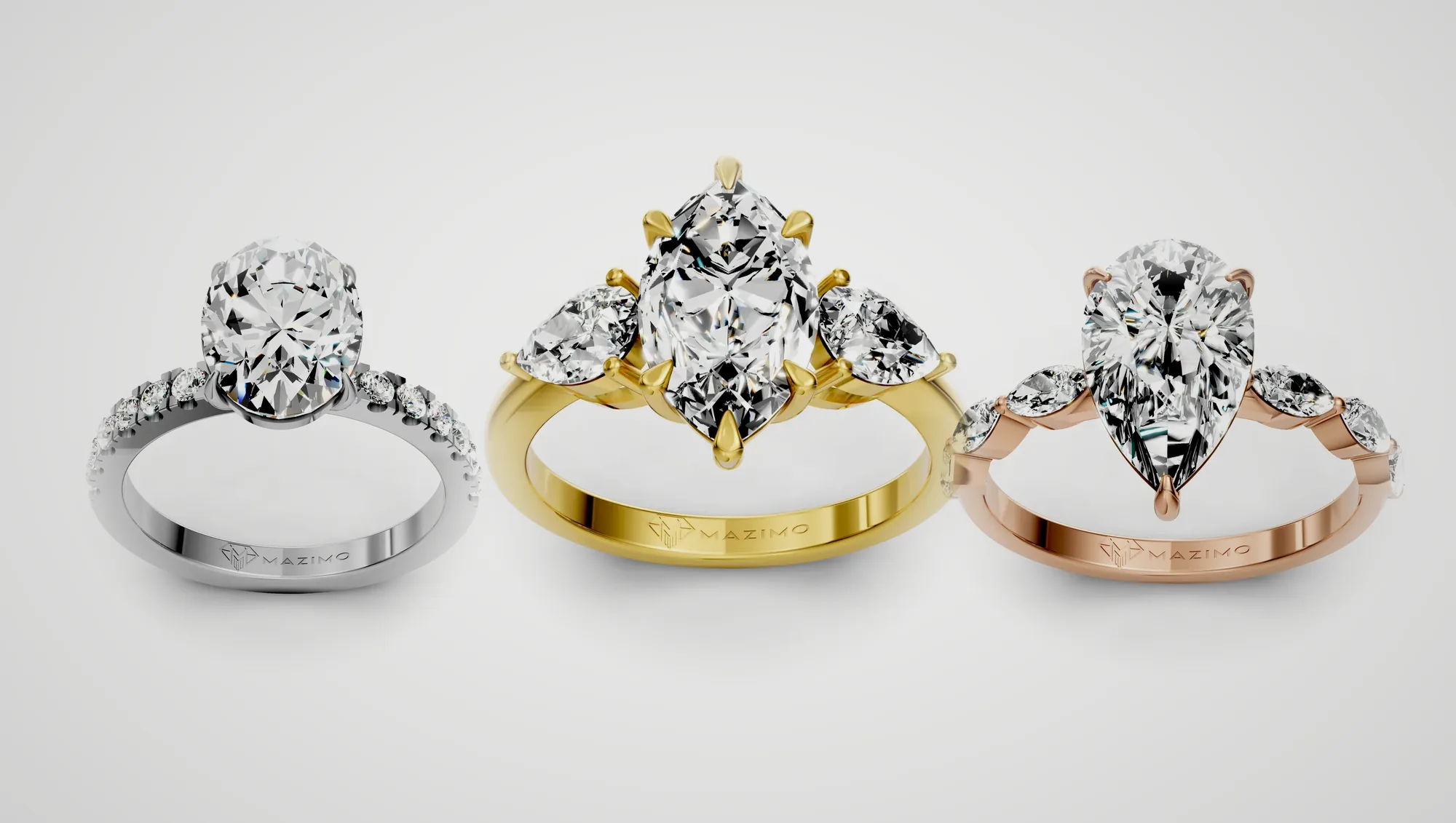
A probe touches one stone at a time, so a reading on the centre stone says nothing about the others. Our Round Six Claw Solitaire Ring lists 7 diamonds in total, so 6 besides the centre. The Round Pavé Solitaire Ring lists 169, which is 168 besides the centre. The Oval Halo Pavé Ring lists 41, or 40 besides the centre, and the Oval Solitaire Ring, 3.5 ct, has one.
The 168 small stones in the Round Pavé Solitaire Ring are about 0.90 mm each and add up to 0.5 ct, beside a 2 ct centre. GIA's iD100 page says its probe can test diamonds as small as 0.9 mm in diameter; that is GIA's own claim, and we did not test it.
We can set a lab grown or a natural diamond, and our ring pages state neither the origin nor a grade of any stone. Tell us which you prefer, and ask us on WhatsApp what report is available for the stone in your design and how the small stones are described. Browse the pavé rings or book a viewing at Al Manal Center, Deira. The pictures are renders.
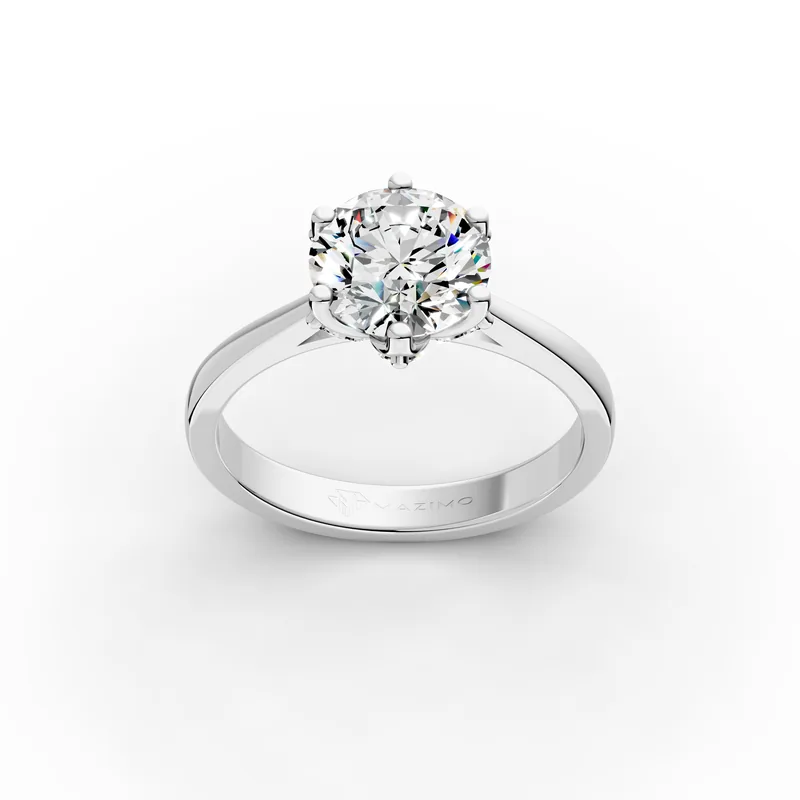 Round Six Claw Solitaire RingRound · 2 ct
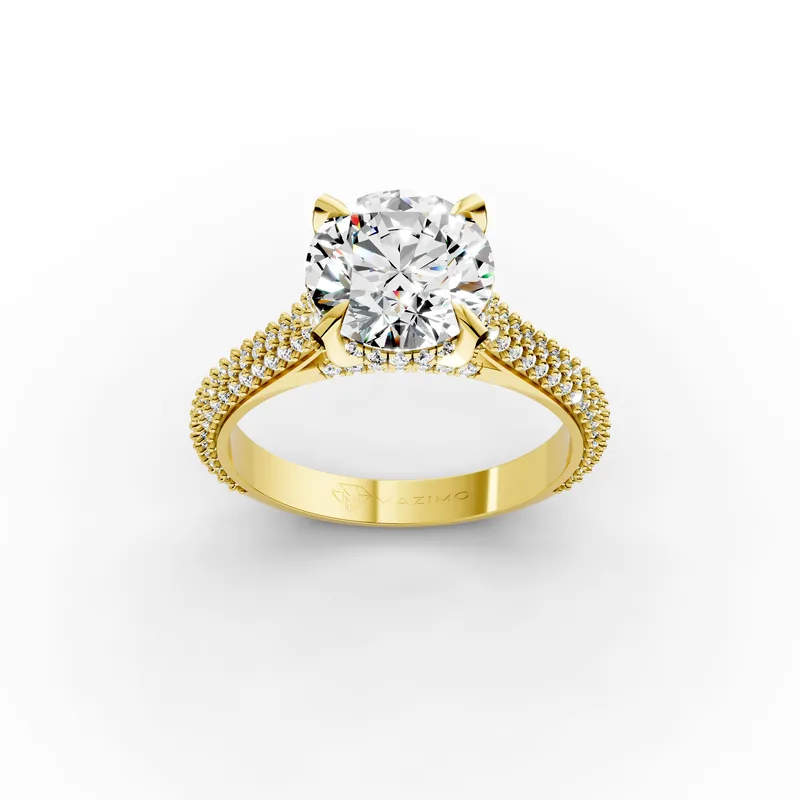 Round Pavé Solitaire RingRound · 2 ct
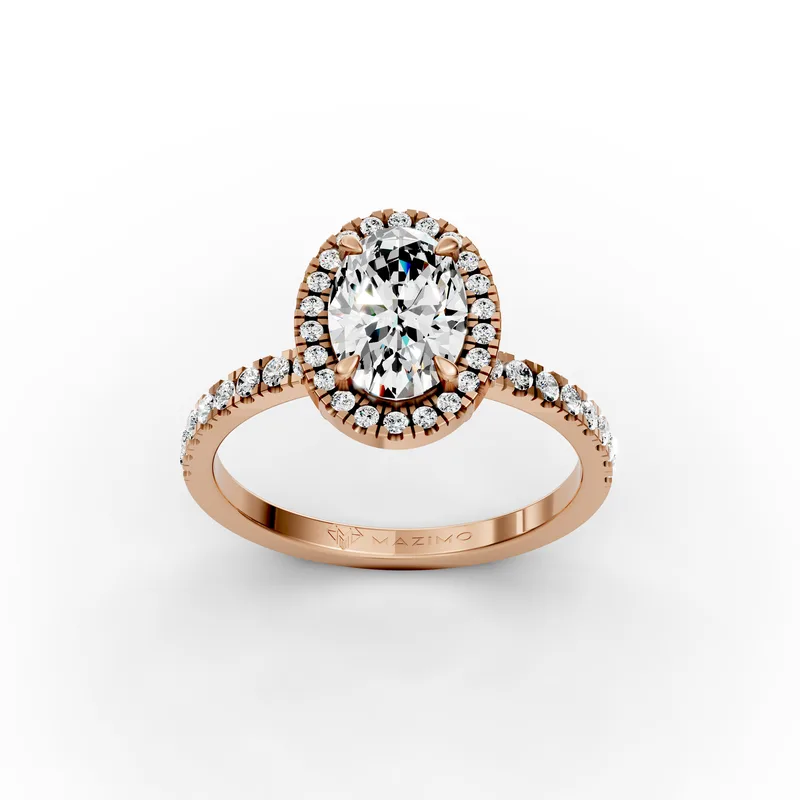 Oval Halo Pavé RingOval · 1.5 ct
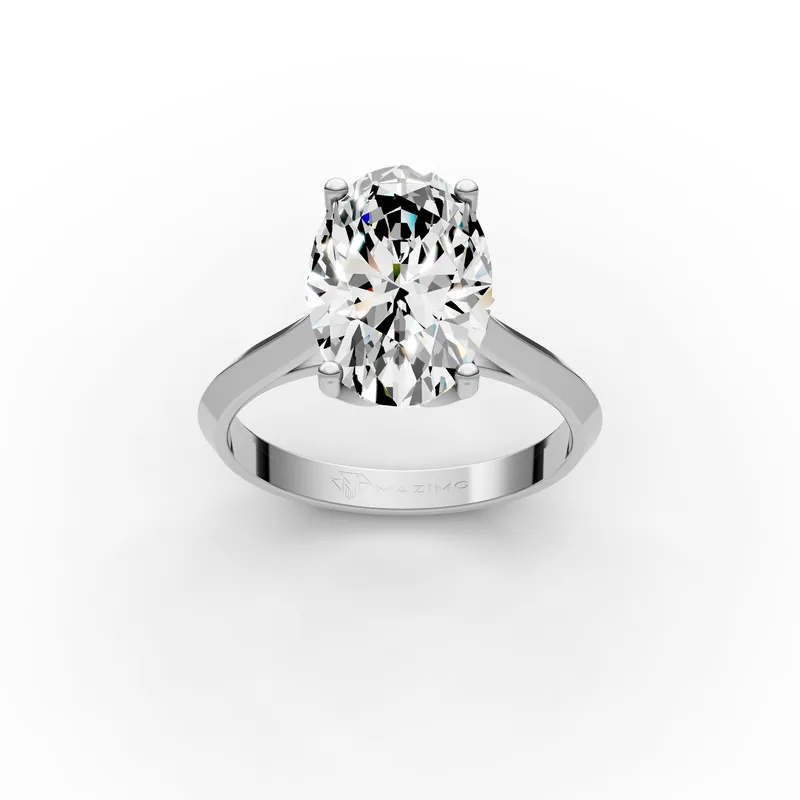 Oval Solitaire Ring, 3.5 ctOval · 3.5 ct
Questions people ask
Will a lab grown diamond test as moissanite?
Not on a thermal tester, which reads it as diamond, but it can on an electrical tester. Some lab grown stones conduct and read as moissanite: IGI points to HPHT metal catalyst remnants, and the Gem Academy to boron in some HPHT and CVD stones. We found no rate, so an odd reading calls for a laboratory check.
Does moissanite pass a diamond tester?
On a thermal tester it often does: GIA's 1997 study, IGI and the FTC all say so. An electrical tester or multi-tester usually separates it, because moissanite conducts, though the Gem Academy says some newer colourless moissanite conducts less and can read as diamond.
Do CVD and HPHT diamonds both pass a diamond tester?
Both read as diamond on a thermal tester, because IGI says thermal testers make no distinction between lab grown and natural diamonds. An electrical tester can differ: IGI names remnants of the HPHT metal catalyst, and the Gem Academy says more growers now make CVD stones with minute boron, which can make them conduct too. We found no rate, so an odd reading calls for a laboratory check.
Can a jeweller tell lab grown from natural diamonds?
Not with a loupe or a handheld tester. GIA says traditional gemmological observation and instruments cannot tell them apart, and it points to a gemmological laboratory. Some trade screening devices flag stones for more testing, but GIA says no cost-effective or rapid tool identifies every one.
How can I tell if my diamond is lab grown?
Read the origin wording on its laboratory report and check the number on that laboratory's site. Look at the girdle inscription and compare measurements with the stone. With no paper, a gemmological laboratory can examine it and issue a report.
Does a UV light show whether a diamond is lab grown?
Not reliably. Laboratories use deep ultraviolet imaging, but GIA's 2024 update advises against relying on phosphorescence or any single observation, and says low-dose irradiation can remove phosphorescence in colourless HPHT stones. Our reading: a pocket UV torch does not test origin.
Are lab grown diamonds real diamonds?
Yes. GIA says synthetic diamonds are real diamonds with the same properties as natural ones, not imitations, and the FTC definition does not require natural. CIBJO's guidelines still say a lab grown diamond must not be called natural, real or genuine, so the invoice should say lab grown.
At Mazimo. We make 18K gold diamond rings to order in UAE sizes 46 to 62, and we can set a lab grown or a natural diamond: tell us which you prefer. Preview a ring at true size in our ring designer and ask for the price on WhatsApp. For the paperwork side, read our guides to lab grown and natural diamonds in the UAE and diamond certificates in Dubai.