DIAMONDS
17 October 2026
How to Clean a Diamond Ring at Home and Check the Claws
Clean a diamond ring at home with warm water and soap, then test for a loose claw or prong. What to avoid, how often to check and our warranty terms.
How to clean a diamond ring at home: soak it for ten minutes in warm water with a drop of mild dish soap, brush gently with a soft toothbrush, rinse, and pat it dry. GIA's 2017 engagement ring article names the same water, soap and brush method. Then press each stone gently: if one moves, it is loose, so stop wearing the ring and see a jeweller.
At a glance
- Warm water, mild dish soap and a soft toothbrush are enough for the weekly clean at home; a jeweller's check sits alongside it.
- GIA's care page says abrasive, ultrasonic and steam cleaners are not for home use, though its other pages disagree on ultrasonic.
- The push test finds a loose claw (GIA says prong): press the stone gently, and if it moves, stop wearing the ring.
- GIA suggests a prong check every six months and we ask for a yearly one on a Mazimo ring; the push test covers the months between.
How to clean a diamond ring at home
Clean a diamond ring weekly. These steps are our routine, built on GIA's care page, which lists household detergents and lint-free cloths as safe, and on our jewellery care guide.
- Soak. Leave the ring for ten minutes in warm water with a drop of mild dish soap.
- Brush. Use a soft toothbrush kept for jewellery. GIA's 2015 article on keeping a diamond sparkling says the back of the diamond tends to collect the most oil and dirt, so turn the ring over.
- Rinse and dry. Close the drain, because GIA warns against open drains. We also suggest working over a bowl. Then pat the ring dry with a lint-free cloth.
Ten minutes is our care guide's time, and AGS says about 20. Weekly is our habit: GIA says to soak once or twice a week, AGS about once a month for rings worn often.
A cloudy ring is often a film rather than the stone. GIA says dirt will not chip a diamond but dulls its appearance, and that finger oils make dirt collect, so a clean should remove the film. A lab grown diamond is the same crystal as a mined one, and a dull one usually has the same cause. See our guide to lab grown and natural diamonds.
What not to clean a diamond ring with
GIA's care page calls powdered abrasive cleansers, ultrasonic cleaners and steam cleaners harsher methods not recommended for home use. We also leave toothpaste, bleach and chlorine alone, on the sources in the table, and leave ultrasonic and steam machines to a jeweller.
| Method | What the sources say | Our line |
|---|---|---|
| Abrasives and toothpaste | GIA's care page lists powdered abrasive cleansers. GIA's 2015 article says never use toothpaste. | Skip them. Our care guide also rules out baking soda. |
| Chlorine and bleach | GIA's 2015 article: no chlorine bleach. Gold guide: avoid chlorine. AGS: avoid chlorine or bleach. | Keep rings away from chlorine: GIA says it can damage the alloying metals in gold. |
| Ultrasonic and steam | GIA's care page: not at home. Other GIA pages disagree on ultrasonic. | Neither at home. A jeweller should check the stones first. |
GIA's pages disagree on ultrasonic cleaners, and we say so. The care page says they can loosen stones, GIA's 2017 article calls them safe for untreated diamonds, and the 2015 article leaves them to a jeweller. GIA's 2026 settings guide says they can dislodge stones that are already loose. Our rule is the cautious one: none on set stones, since our ring pages do not state whether a stone is treated.
White gold needs one more caution. GIA's gold guide says it is usually rhodium plated and that the rhodium can wear away over time. Our white gold is re-plated over time, and a ring that stays warm-toned on the underside and claws after a wash points to worn plating, not dirt: see our white gold rhodium guide. Ask the boutique about re-plating.
How to tell if a diamond is loose in its setting: push test and loupe
A loose claw, which GIA calls a prong, no longer holds the stone firmly. Press the stone gently with a fingertip: GIA's 2017 article says that if it moves, it is loose. Then look for gaps between the diamond and the setting with the 10× loupe GIA suggests, which also helps spot damaged prongs, though a loupe does not replace a jeweller's check. GIA's care page adds that a diamond loose in its setting can wear through a prong over time.
Only the push test and the loupe in our routine come from GIA; the rest is our own common sense, not a standard.
- Hold the ring over a soft towel and press each stone gently, one at a time: nothing should move. Then hold it near your ear and tilt it, and listen: there should be no rattle or tick.
- Look from the side with a loupe or a zoomed phone camera. Each claw should touch the stone with no gap, and no tip should look thin, bent or sharp.
- On a bezel, look for a gap between the rim and the stone. On pavé, look for a missing bead or a stone sitting low.
- If anything moves or rattles, stop wearing the ring. If you wear a wedding band beside it, check where the two meet: our wedding band guide covers how the rings sit together.
Every extra small stone is one more place to check. That is our observation from our ring specifications, and GIA's settings guide says halo rings may need more maintenance and pavé rings occasional maintenance.
- Bezel. GIA says a bezel helps keep the centre stone from falling out but gives no check interval. The Oval Bezel Solitaire Ring lists 25 accent diamonds of about 1 mm beneath the bezel. That is 26 diamonds with the centre, 1 + 25, and we ask for a yearly check of its setting: see our bezel and claw comparison.
- Pavé. The Round Pavé Solitaire Ring lists 168 pavé rounds of about 0.9 mm: 168 small stones set along the band and beneath one centre stone. See also the new signet and bezel rings.
- Halo. The Oval Pavé Hidden Halo Ring, 5.5 ct, lists 28 hidden halo rounds and 14 pavé rounds, so 28 + 14 = 42 small stones. The Oval Halo Pavé Ring lists 22 halo and 18 band rounds, so 22 + 18 = 40.
Our halo guide covers halo upkeep, and our cluster guide does the same for cluster rings.
How often to clean a diamond ring and have it checked
GIA suggests having prongs checked every six months, and we ask you to bring a Mazimo ring in once a year. GIA also suggests a periodic professional clean.
| Source | Home clean | Check by a jeweller |
|---|---|---|
| GIA | Soak once or twice a week | Prongs every six months, or yearly if that seems too frequent |
| AGS (2022) | About once a month for rings worn often | No prong-check interval found |
| Mazimo | Weekly, our suggestion | Once a year on a Mazimo ring: claws checked, clean complimentary |
In the months between, the push test lets you look at the claws yourself but does not replace a jeweller's check. Our pages promise a yearly check, and we do not claim it matches GIA's six months. Store the ring alone in a soft pouch, as GIA advises.
Pool, gym, sunscreen and sand: when to take the ring off
Take the ring off for the pool and the gym: this is our advice, drawing on our care guide and GIA's pages.
- Sand, sunscreen and hand cream. Our advice is to wash them off before they settle in the claws. GIA says finger oils make dirt collect, and AGS says oil and grime build up.
- Pool. Our care line is to keep a ring away from perfume, chlorine and hard knocks. GIA says chlorine can damage the alloying metals in gold.
- Gym. GIA says to remove the ring for exercise and gardening, and our care guide adds cleaning and cooking.
GIA's care page calls diamonds very stable. It points to two threats: sudden, extreme temperature change, with house fires and jewellers' torches as its examples, and a hard blow in the wrong direction, which it says can happen even while a ring is worn. It does not discuss pools, showers or Dubai heat, so we do not either.
If a claw lifts or a stone goes missing
Stop wearing the ring. For a Mazimo ring, bring it to us with the invoice, or message us on WhatsApp with photos. Our lifetime warranty covers craftsmanship defects and certified purity, not damage or loss.
- Repaired free. Manufacturing defects in clasps, hinges, settings and soldering, for the life of the piece.
- Excluded. Wear, accidental damage and modifications by third parties.
- Also. Lifetime cleaning and polishing, and an annual check of settings on diamond pieces. Other work is quoted first, and our goldsmiths repair Mazimo and non-Mazimo pieces.
Before any repair, ask us whether a lifted claw counts as a defect or as wear, and for a quote. The warranty does not mention a lost or chipped stone, so do not assume one is covered.
Insurance is a separate question
Our warranty is not insurance. GIA's 2017 article says many insurers require an appraisal and regular check-ups, and suggests checking that cover includes damage and loss. Ask your insurer what it requires. Our services page lists written valuations for insurance without stating their scope for diamond rings.
When home cleaning is not the right choice
Take the ring to a jeweller when anything moves, a small stone is missing, a claw is bent, or the ring snags. Do not heat, glue or bend a claw. GIA names sudden, extreme temperature change as a threat to the stone; the gluing and bending rule is our common sense.
A ring that no longer fits is a sizing question: only the first resizing is complimentary, and our guide on resizing a diamond ring explains the limits.
Rings with more small stones to check
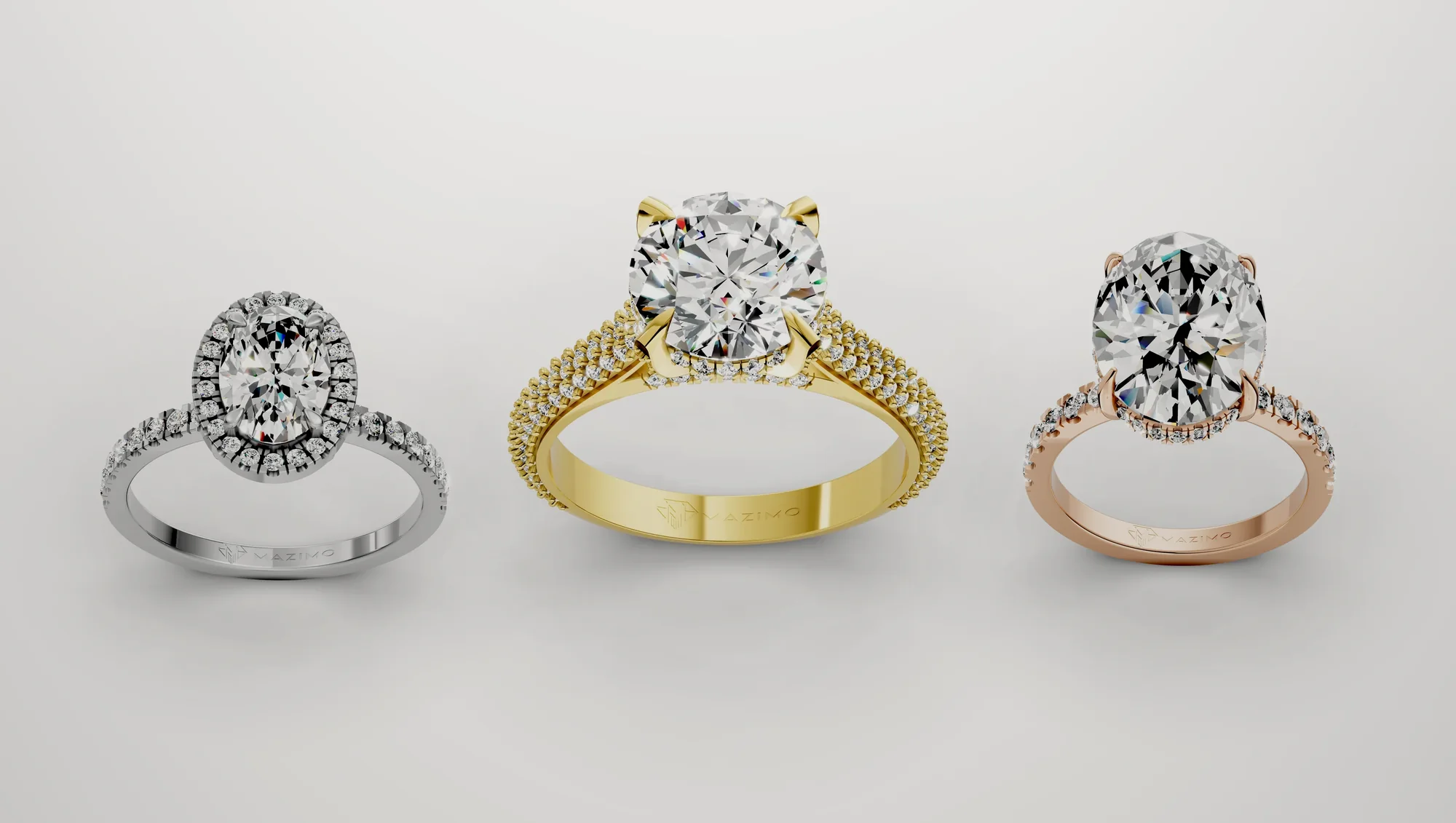
These four rings have 25 to 168 small stones to check, each made to order in 18K white, yellow or rose gold. The pictures are renders.
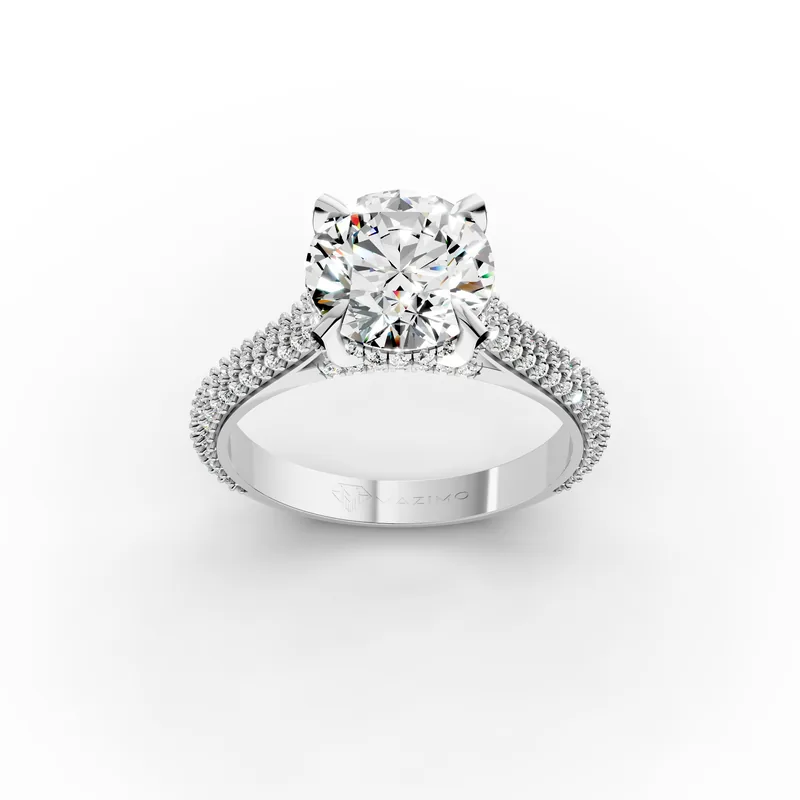 Round Pavé Solitaire RingRound · 2 ct
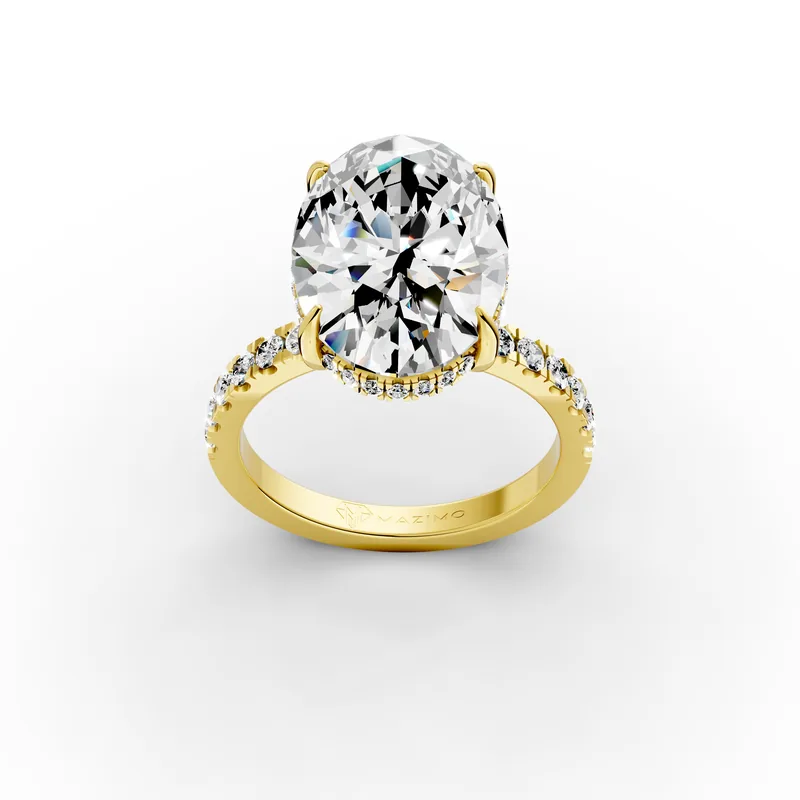 Oval Pavé Hidden Halo Ring, 5.5 ctOval · 18K gold
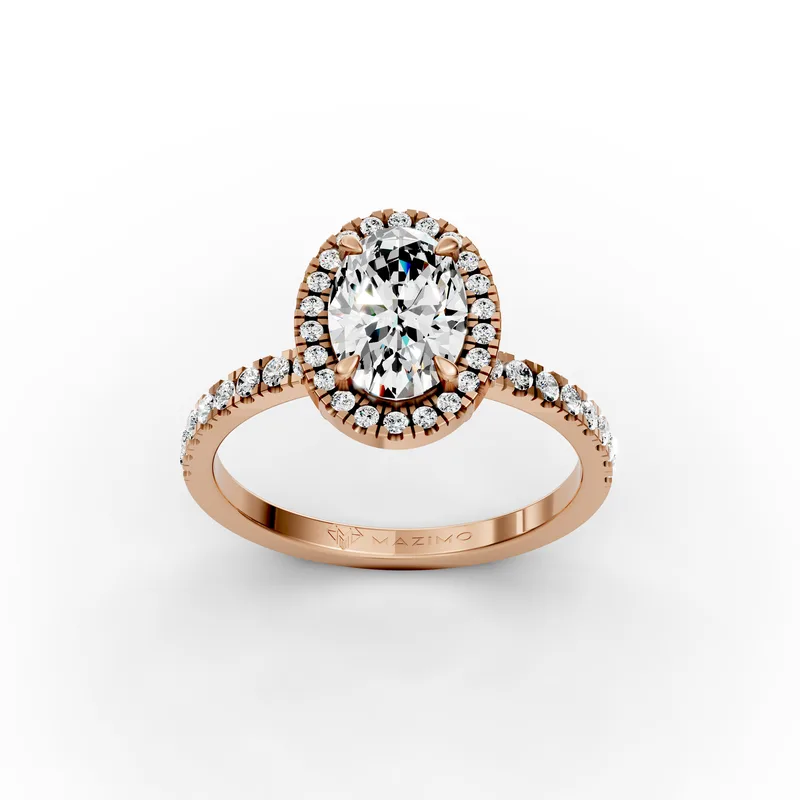 Oval Halo Pavé RingOval · 1.5 ct
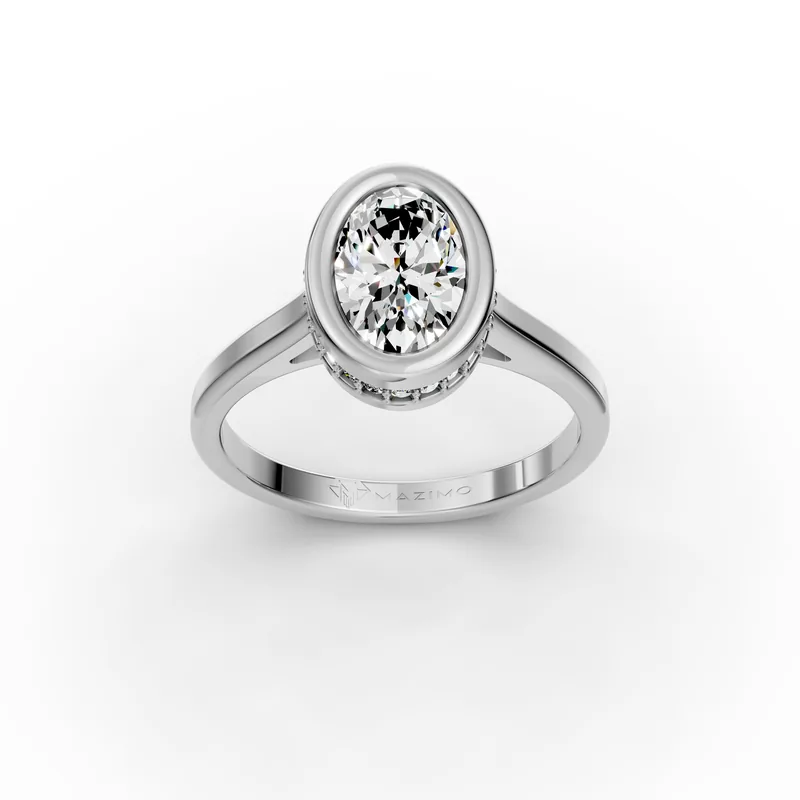 Oval Bezel Solitaire RingOval · 1.5 ct
To see them up close, book a private viewing.
Questions people ask
What should I use to clean a diamond ring at home?
Warm water, a drop of mild dish soap and a soft toothbrush kept for jewellery.
How can I tell if my diamond is loose in its setting?
Press the stone gently: GIA says that if it moves, it is loose. Look for gaps with a 10× loupe, and listen for a rattle (our addition).
Why does my diamond ring look cloudy, and how do I make it sparkle again?
Often a film of oil, soap or cream: GIA says dirt dulls a diamond, so the soak and brush above should bring the shine back. On white gold, warm tones that survive a wash may be worn rhodium.
What should you not clean a diamond ring with, and is an ultrasonic cleaner safe?
Leave powdered abrasive cleansers, toothpaste, bleach and chlorine alone. Ultrasonic cleaners are not for home use on set stones, in our view: GIA's care page does not recommend them, although a 2017 GIA article calls them safe for untreated diamonds.
How often should a diamond ring be checked by a jeweller?
GIA suggests every six months, or yearly if that seems too frequent. We ask you to bring a Mazimo ring in once a year.
Can I wear my diamond ring in the pool or the shower?
Take it off for the pool: GIA says chlorine can damage the alloying metals in gold, and on white gold our rhodium guide explains the plating. Soap and oils can leave a film that dulls the stone, so take it off for the shower too.
For how each setting wears, read our engagement ring settings guide.
At Mazimo. Bring your Mazimo ring to Al Manal Center, Deira, a few minutes from the Gold Souk, once a year for a check of the claws and a complimentary clean, or walk in any day. A ring from elsewhere? Our goldsmiths repair Mazimo and non-Mazimo pieces, quoted before work starts: message us on WhatsApp first. Our 18K rings are hallmarked in Dubai and delivered insured across the UAE at no charge.